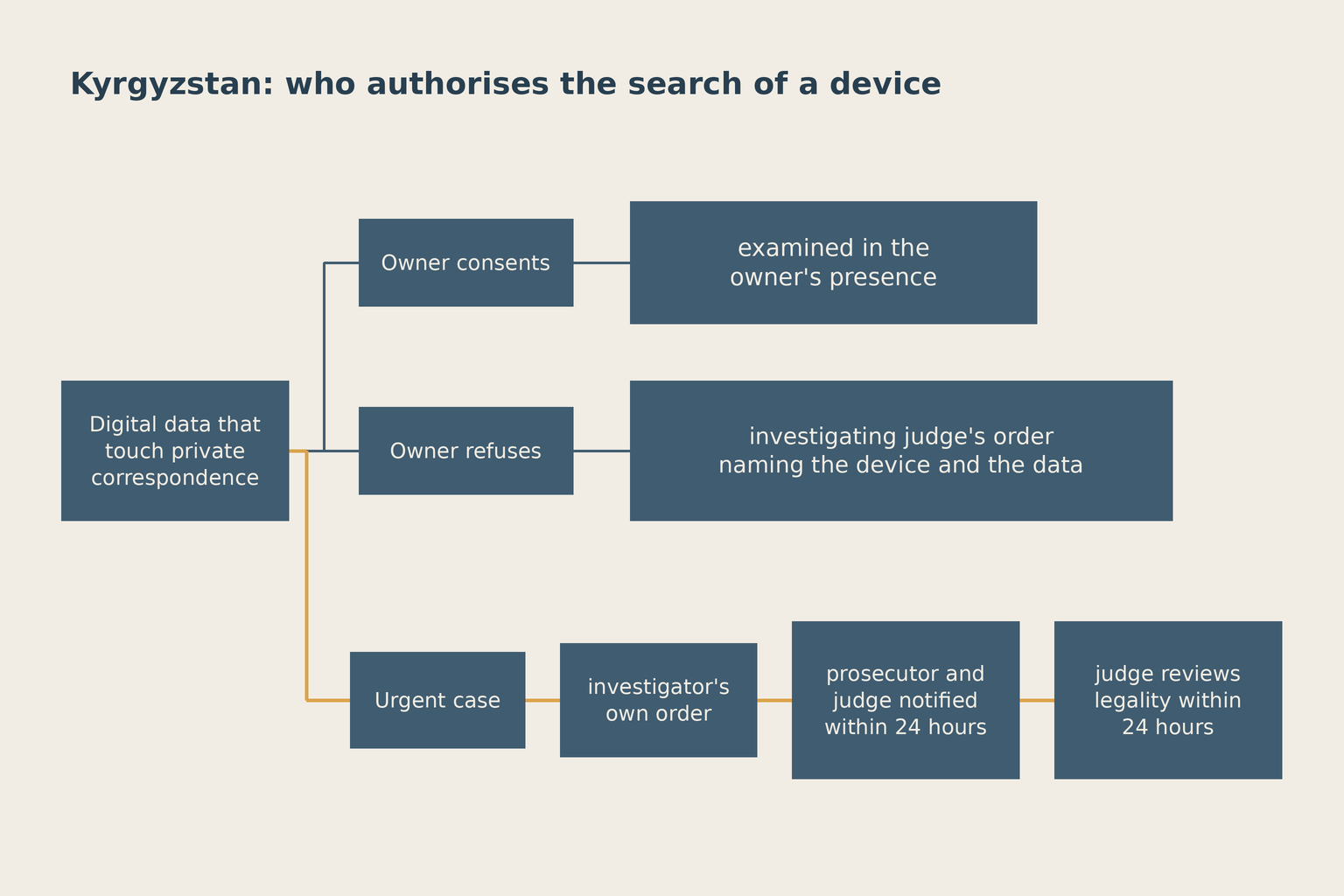
The rule covers digital data that touch the privacy of correspondence. With the owner’s consent, the data are examined in the owner’s presence. If the owner refuses, an investigating judge must issue a decision that names the device and the categories of data.
Urgent cases are defined as a threat that the data will be destroyed or altered, traces that could not be recovered later, or an urgent need to establish the source of a transmission. The investigator then acts on a reasoned order of his own and notifies the prosecutor and the investigating judge within 24 hours, and the judge checks the order’s legality within 24 hours.
Examination is barred where it would breach attorney-client privilege. A person being searched is obliged to give access to their devices.
The amendments are part of law No. 160, which the Jogorku Kenesh passed on 28 October and President Sadyr Japarov signed on 19 November, Caravan-Info reported. The law also allows the seizure of virtual assets in criminal proceedings and makes manipulation of the securities market a crime.