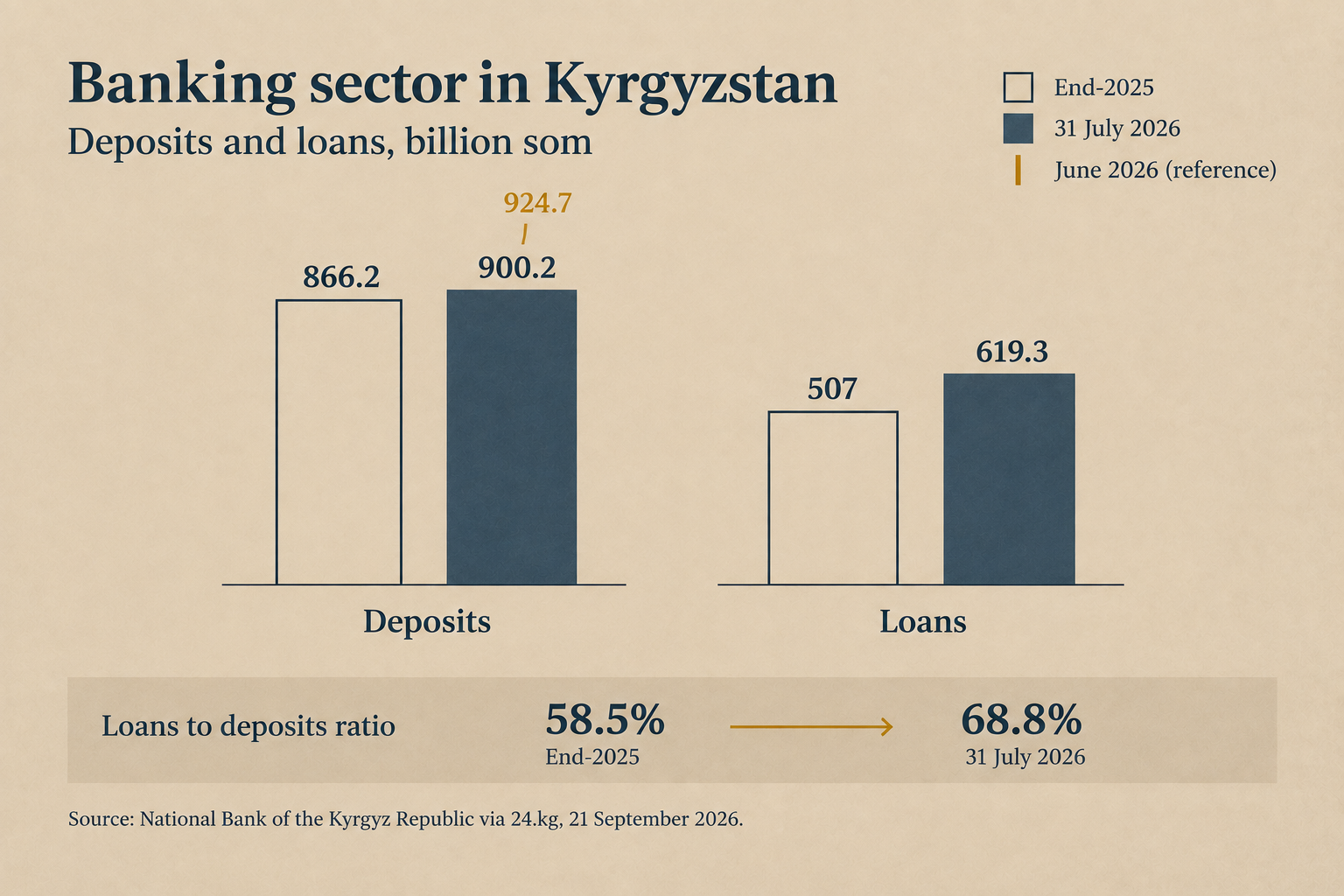
The bank put the fall in deposits down to “planned operations of legal entities on their settlement accounts”: wages, taxes, settlements between companies and investment spending. Assets, at 1,476.1 billion som, shrank on the movement of funds, large settlements in the corporate and state sectors and the payment of current obligations, it said.
Loans now equal 68.8% of deposits, against 58.5% at the end of 2025, on CAW’s arithmetic from the bank’s figures.
Against the end of 2025 the deposit base is still 3.9% higher, up from 866.2 billion som, and households’ term deposits in som have grown 12.2%. Lending has moved faster. The loan book reached 619.3 billion som, 22.2% above the 507 billion of December. Charter capital rose to 246.5 billion som from 161.5 billion.
The prudential ratios are far above their floors: liquidity stood at 89.2% against a 45% norm and capital adequacy at 31.1% against 12%, both higher than at the end of 2025. Relative to GDP, assets rose to 66.2% from 61.3% and loans to 27.8% from 25.7%, while deposits slipped to 40.4% from 43.8%. Loans now equal 68.8% of deposits, against 58.5% at the end of 2025, on CAW’s arithmetic from the bank’s figures.
The price of that credit came up in parliament the same day. First deputy cabinet chairman Daniyar Amangeldiev told a Jogorku Kenesh committee that the policy rate would stay at 12% to the end of the year and that “next year we plan to return to the 7% to 8% corridor”, Kaktus reported. The deputy who asked had put inflation at 11% against the National Bank’s target range of 5% to 7%.