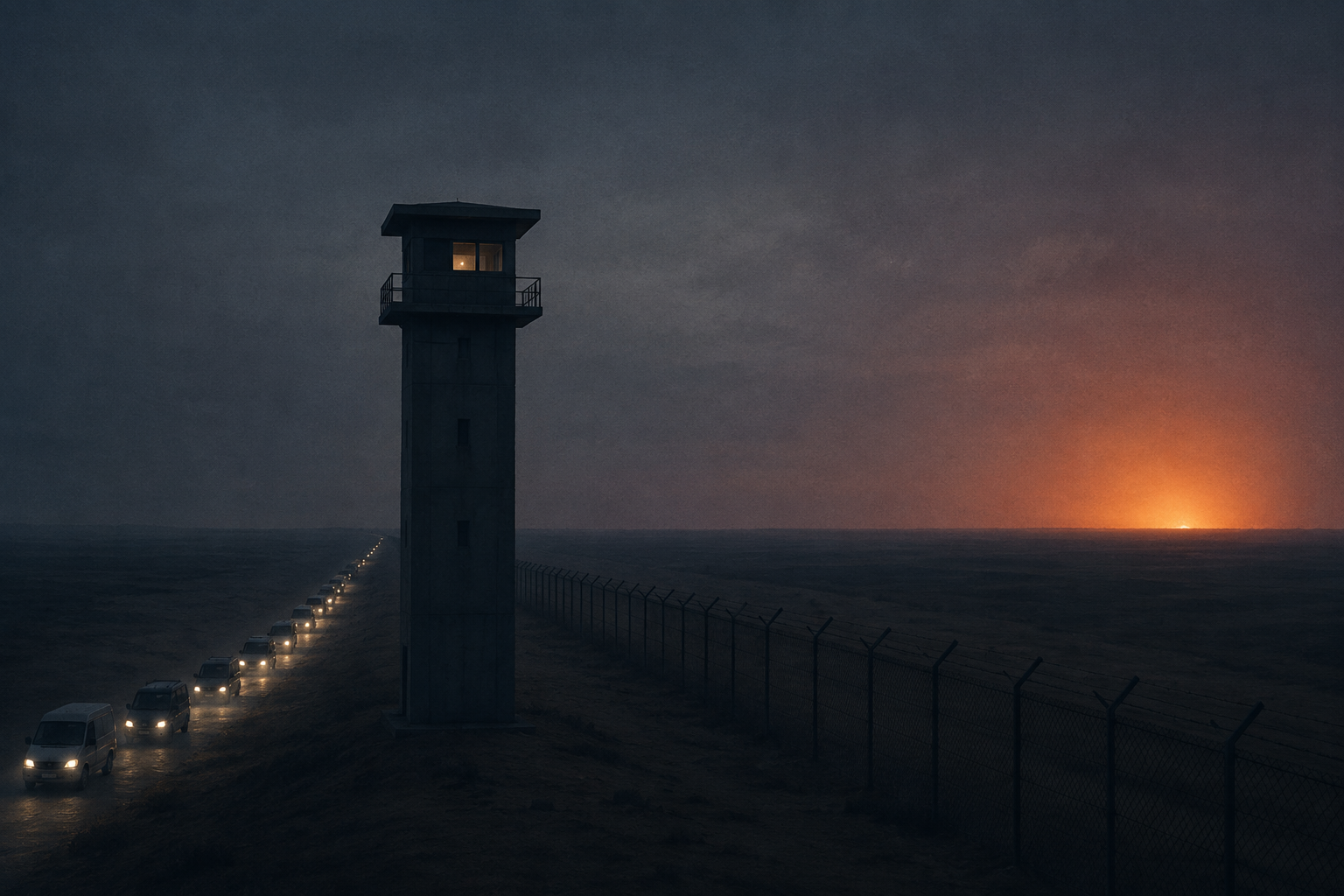
Kazakhstan's Foreign Ministry issued a formal denial on 9 July, responding to Russian media speculation that the drones which hit Omsk on 6 July, some 2,500 kilometres from Ukraine, had launched from Kazakh soil, given the region's proximity to the border. The ministry called the reports "unfounded insinuations" that were "not confirmed by any data or facts," and said its territory, airspace and infrastructure could not be used against another state. Kazakh diplomats framed the episode as a threat to the "traditionally friendly nature" of relations with Moscow.
The denial addressed an accusation. It did nothing about the consequence. Russia's fuel crisis, driven by a Ukrainian campaign that has now struck every one of the country's ten largest refineries, has sent thousands of Russian drivers across the border into Kazakhstan's West Kazakhstan, Aktobe and Pavlodar regions, chasing petrol that costs roughly 45 to 55 rubles a litre against 90 to over 100 rubles at home. Kazakh officials describe kilometre-long queues at border-town filling stations.
Astana's response has been to police its own pumps like a smuggling frontier. The interior ministry has set up 59 checkpoints along the Russian border, limited every foreign vehicle to one crossing a day, and put mobile teams on round-the-clock patrol checking for modified fuel tanks. Officers have logged 255 vehicles with illegally welded auxiliary tanks so far this year and blocked close to 600 smuggling attempts; 61 of those came in a single 48-hour window this month, carrying more than three tons of fuel between them.
Put the two stories together and the position is uncomfortable rather than merely awkward. Kazakhstan is publicly distancing itself from the strike that caused Russia's shortage, while its own cheap, subsidised fuel, protected exactly so that domestic prices stay low, is being pulled toward the same Russian market by ordinary drivers rather than any policy of Astana's. The country that says it played no part in the crisis is now the one paying to contain it.
The country that says it played no part in the crisis is now the one paying to contain it.
None of this is new terrain for Kazakhstan, which has spent the summer discovering how many ways one neighbour's war can reach a state that isn't in it: gas held hostage by a Russian processing plant at Karachaganak, an export ban drafted to wall off its own market, and now a fuel-tourism surge it has to police with its own interior ministry. The through-line is exposure without agency: pressures Astana never chose, arriving on a schedule it cannot see, left to its interior ministry and its diplomats to manage.
Watch whether Moscow accepts the denial or lets the insinuations continue in its domestic media, since a Russian public convinced that Kazakhstan enabled the strike is a harder thing to manage diplomatically than a fuel queue. Watch the checkpoint numbers, which will only climb if Russia's refineries stay down through the summer driving season. And watch whether Astana's patience with hosting both a war's blame and its side effects starts to show in less careful language than Thursday's statement.