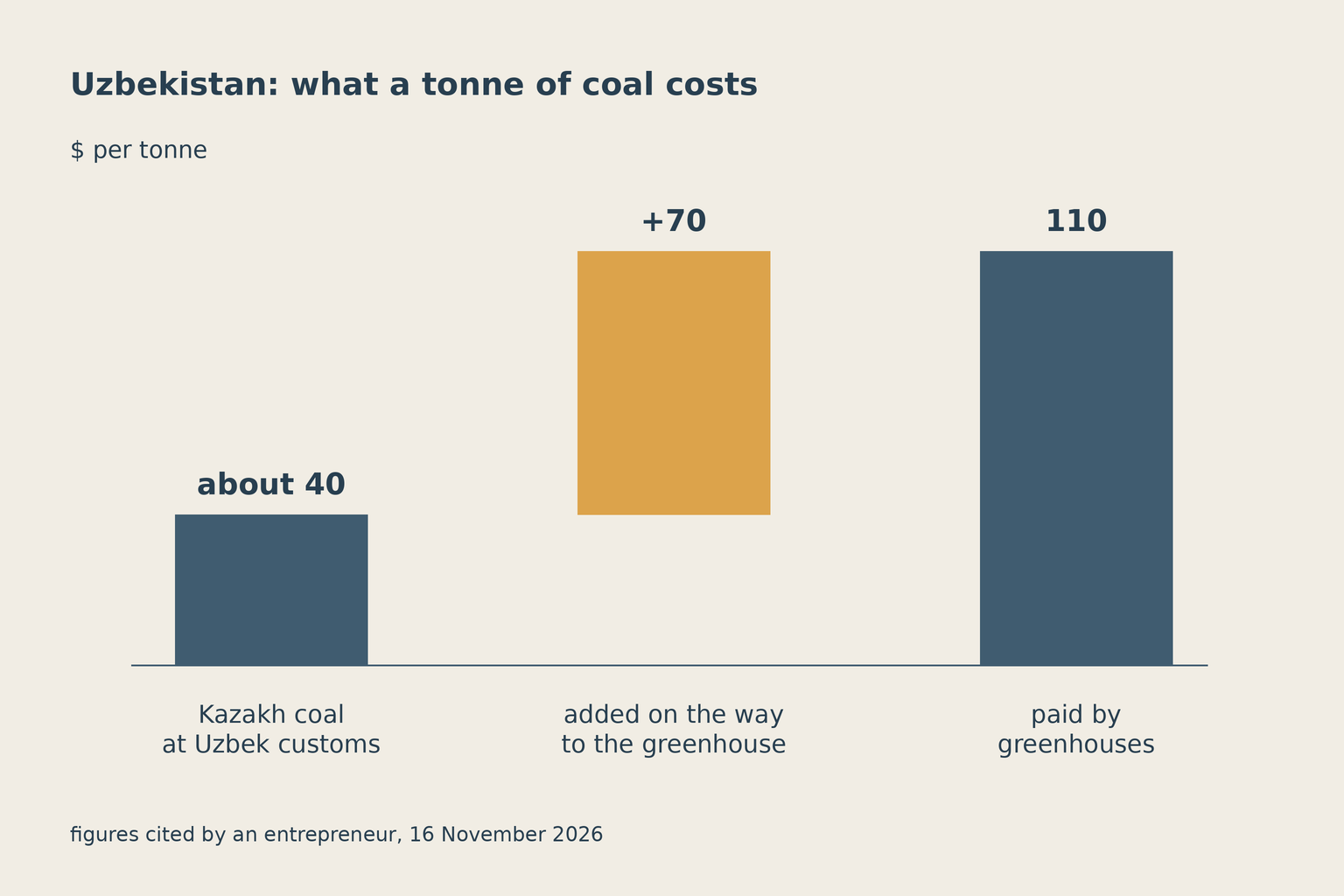
The gap is $70 a tonne, and the final price is 2.75 times the customs value, Gazeta calculated. It may include rail freight, unloading, storage, road delivery, taxes and traders’ margins, the outlet noted.
Akhmedov said suppliers at Chernyaevka, a border area near Tashkent, offer coal at $32 a tonne and will load it onto trucks, while customs posts around Tashkent admit coal only by rail. Asked by an official whether Kazakhstan or Uzbekistan had set that rule, Akhmedov answered: “It is our requirement.”
A government statement of 26 May this year said coal would in future be imported exclusively by rail, and the state company Uzbekugol repeats the rule on its website. Gazeta read the cabinet resolution the company cites, No. 418 of 30 July, and found mechanisms for supply and rail carriage and no general ban on road imports.
About 66 unloading sidings were once in the hands of one company, a system the president has since abolished, Akhmedov said. He added that wagons run short in the heating season, when households are supplied first.
Kazakhstan exported about 1.02 million tonnes of coal to Uzbekistan in January to September for $23.1 million, an average of about $22.73 a tonne, Gazeta wrote, citing Kazakhstan’s Bureau of National Statistics. The average covers every grade and does not single out Shubarkol, the outlet noted.
Uzbekistan ended state regulation of domestic coal prices on 1 June, and household prices have more than doubled since, according to the National Statistics Committee. On 20 November the Competition Committee said it would examine coal prices and resale markups.