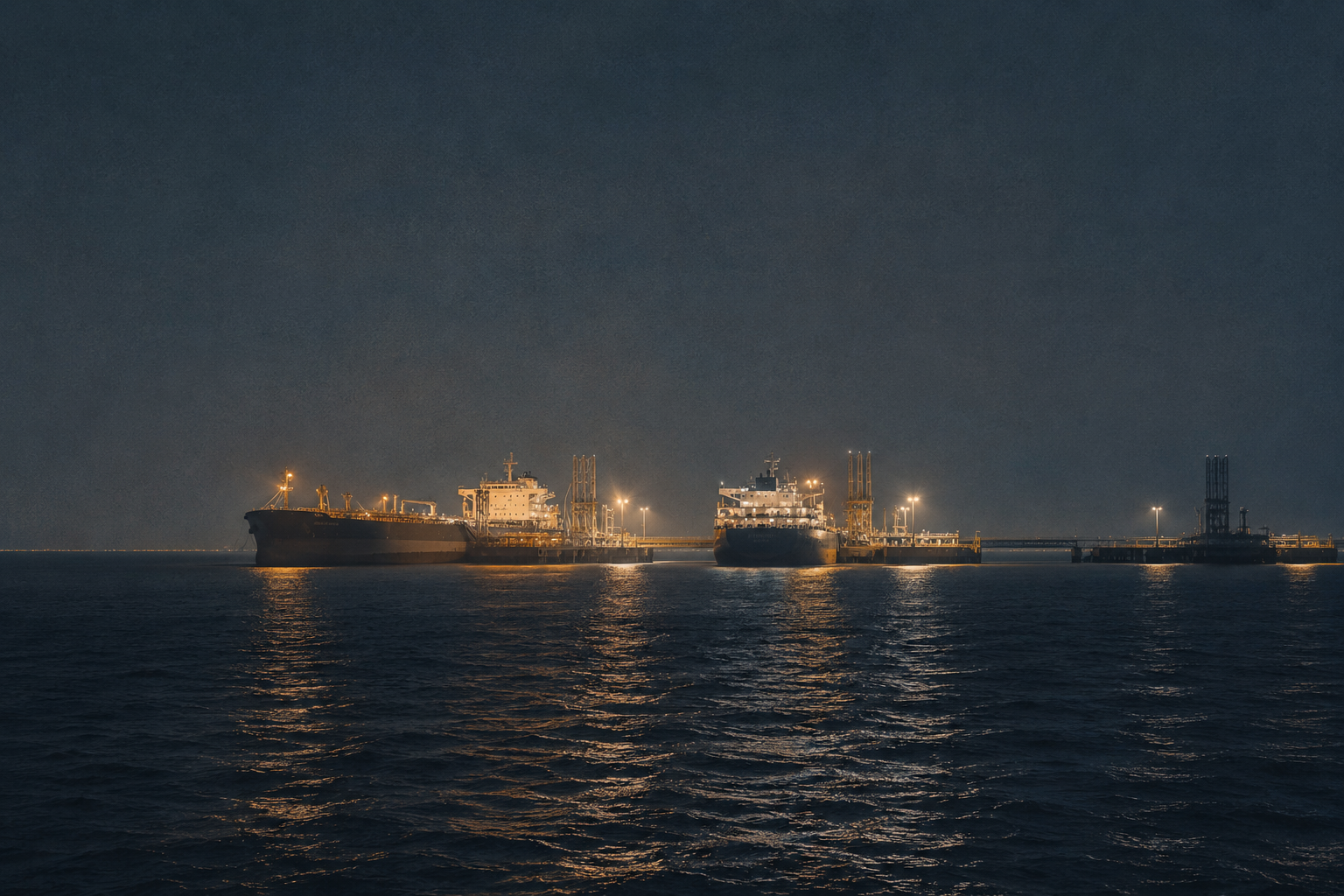
Mike Wirth took the Kazakhstan question on Chevron’s second-quarter earnings call on 31 July. “The pipeline is flowing. We’ve been loading ships this week,” the chief executive said. Two of the Caspian Pipeline Consortium’s three single point moorings are operating; the third is under refurbishment and expected back within the third quarter.
The words carry weight because nobody closer to the pipe has said them. Drones hit the tankers NISSOS SIFNOS and MARATHI in the early hours of 30 July, the second stop in 10 days and three days after the previous restart. Nothing further from the consortium has surfaced in the wires since its statement on the morning of the attack; the fullest account on record now belongs to its largest shipper, addressing investors.
“The pipeline is flowing. We’ve been loading ships this week.”
Kazakhstan’s energy ministry filled in the Saturday picture in careful pieces. A full shutdown “is not being considered”. Intake from shippers and tank filling continue, at 100,000 tonnes a day in early August, roughly a third of June’s average of 286,600 tonnes. Further growth, the ministry said, depends on the timely positioning of vessels at the marine terminal.
Wirth also confirmed the conversation the region has been waiting to see in writing: the United States, Kazakhstan and Chevron are discussing measures to keep the route running without interruption. “We are the largest shipper, but not the only one,” he said. Marco Rubio and Yermek Kosherbayev had put the pipeline on the two governments’ agenda on 29 July; the discussion, per the company, now covers operational guarantees.
On Sunday the seven OPEC+ producers returning voluntary cuts added 188,000 barrels a day for September, the final tranche of that unwinding. Kazakhstan’s share is 10,000, lifting its quota to 1.628 million barrels a day. Output, by Kursiv’s account, fell to about 1.63 million after the attacks, against a July average of 2.07 million. The paper now roughly describes what the damaged terminal permits.
July’s loading total, due in the first days of August, has not surfaced in the wires. It will be the first hard number on what two stoppages in one month cost.