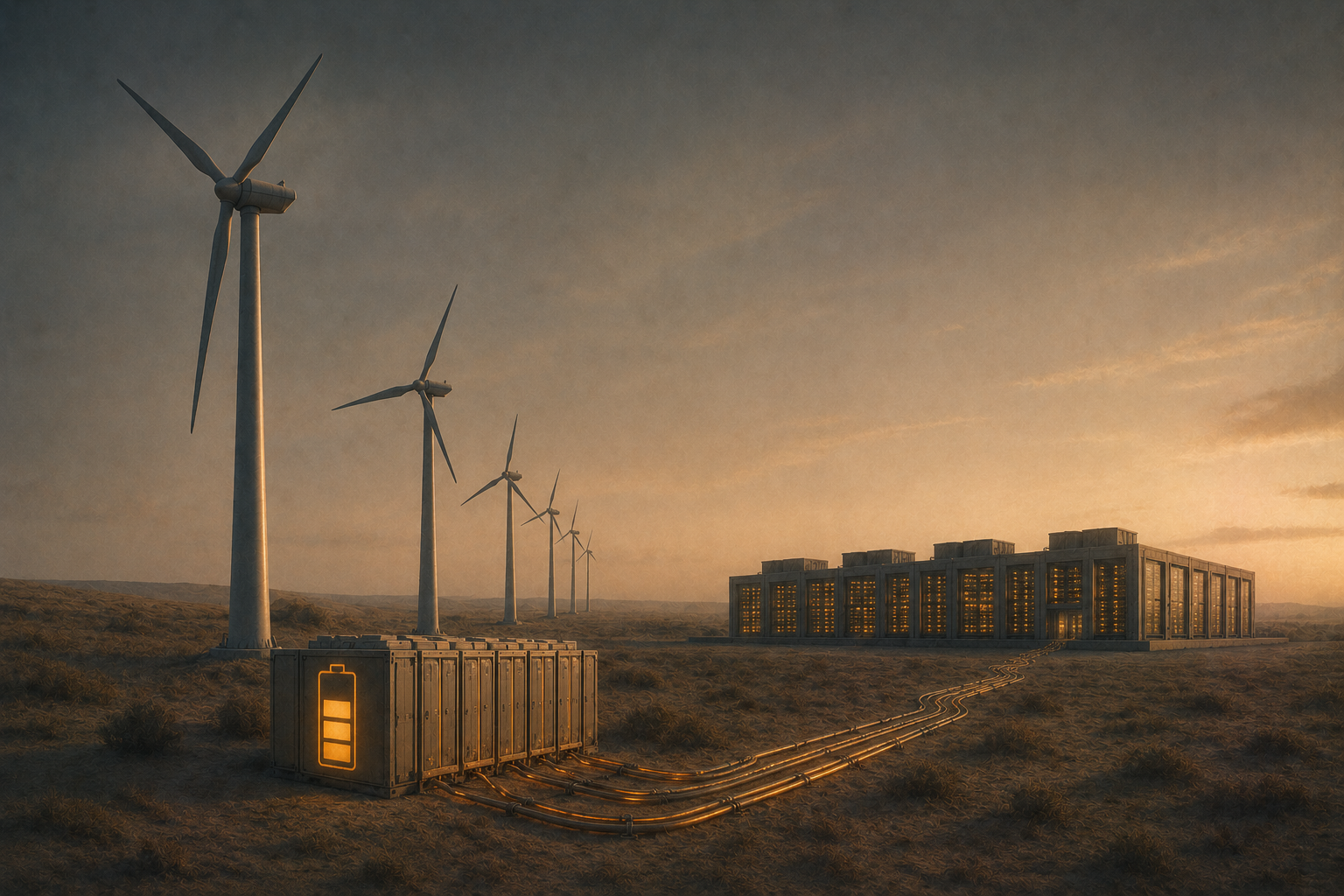
The project pairs 1 GW of wind with a 600 megawatt-hour battery and more than 400 kilometres of new transmission line. The developers, Masdar with W Solar, Qazaq Green Power and the Kazakhstan Investment Development Fund, say it will power about 880,000 homes. Southern Kazakhstan is the part of the country most short of electricity, and this ranks among its largest foreign investments.
The Gulf is now a standing vector in Kazakh energy. Masdar, owned out of Abu Dhabi, is targeting 100 GW worldwide by 2030 and has made Central Asia a growth region, with projects in Uzbekistan and Azerbaijan too. The wind farm gives the UAE a durable stake in Kazakhstan’s power system, in the same week Kazakhstan signed the US AI bloc and toasted Chinese trade. Capital for the grid, like everything else Kazakhstan buys, comes multi-vector.
The more telling part is the second deal. Masdar also signed a roadmap with Kazakhstan’s AI and digital ministry to study round-the-clock clean power for data centres. That is the knot CAW keeps pointing at: the AI build-out Kazakhstan is courting needs vast, constant electricity, in a grid that already runs short in the south and loses a fifth of what it makes. A wind farm with batteries is one answer to where the gigawatts for the data centres are meant to come from. The groundbreaking is real progress on the hardest constraint under the country’s digital ambitions.