Search

Mongolia’s parliament fails to make a quorum for a new justice minister and its rewritten fiscal rule; the 2027 draft prints a 2% deficit
Fifty-two of 126 members registered for Thursday’s plenary, 41.3%, and the Speaker moved the sitting to Monday. The Democratic Party sent 1 of its 42 members; the governing party sent 44 of its 68. On the agenda were the replacement of the justice minister sacked on Wednesday and the amendment that takes 2 indicators out of the fiscal rule.
Pashinyan tells parliament the Trump route runs from Azerbaijan's border to Azerbaijan's border, and Armenia decides at the gates
On the day the Constitutional Court cleared the TRIPP agreement, the prime minister spent the government hour answering Baku's description of the route and Moscow's description of the price of Europe. He conceded the geography, kept the jurisdiction and moved the base question to Putin.

Seoul's summit week reaches its declaration with five different baskets on the table
The first Korea-Central Asia summit sits in Seoul on Wednesday with a Seoul Declaration on supply chains and future industries to adopt. The week of bilateral talks that led to it shows what each capital came for: Kazakhstan a status upgrade and $19 billion of commercial agreements, Uzbekistan a $12 billion portfolio, Turkmenistan a named contractor for its canal, Tajikistan 17 documents with one railway agreement among them, Kyrgyzstan 18 documents and a trade office. Korea's instruments are loans and guarantees for Korean equipment. The declaration adds a calendar.

Armenia's Constitutional Court takes up the Trump route at 11:00, 6 days after Baku dated the first works to 2027
The court sits on Tuesday morning to say whether the framework agreement Yerevan signed with Washington in June, a 49-year company that is 74% American on land Armenia keeps, fits the constitution. The ruling is the step before parliament. The calendar for the route itself has already been written elsewhere.
The upstream no longer asks: what the Nile's war of nerves means for the Amu Darya
On 9 September the Grand Ethiopian Renaissance Dam turns one and Tajikistan turns 35. The dates share a plot: a poor upstream state builds the largest thing it has ever built on a river the downstream lives by. Egypt answered with letters to the Security Council and got a year of arguments about floods. Uzbekistan answered with a railway, a gas valve and a decade of threats, then settled for a 20-year tariff with the World Bank's money behind the dam. On the Amu Darya's other bank a third builder has taken the Ethiopian script line for line, and there is no bank, no tariff and no treaty with which to buy it.

The Kremlin books Pashinyan for Moscow, and puts the referendum he dropped back on the agenda
Vladimir Putin invited Nikol Pashinyan to Moscow and Pashinyan accepted, Dmitry Peskov said on Monday; the two leaders, in his words, will discuss "the choice of the direction of development, Armenia's orientation" and "the holding of the corresponding referendum". A week earlier in Bishkek the Armenian prime minister had taken that referendum off his table. Moscow has now put it on its own, with no date attached.

On the map in your pocket, Russia is 10 Central Asias. On the ground it is 4.3
The UN General Assembly voted on Friday to push the world's maps away from Mercator, for Africa's sake. CAW ran the same arithmetic across Eurasia: the standard web map hands Russia a latitude premium that doubles its visual weight against Central Asia, and hands Central Asia a premium of its own against every neighbour to its south and east. Correcting the map takes the northern half of that bargain away.

Kazakhstan's vice-president gets a decree of his own, and the Presidential Administration keeps the staff
On Saturday Kassym-Jomart Tokayev signed decree No. 1452 “On the powers of the Vice-President of the Republic of Kazakhstan”, the decree that says what Yerlan Karin does in the office he took on 31 August. It gives the vice-president strategic initiatives to draft, seven commissions and councils to run, the Secretariat of the Congress of Leaders of World and Traditional Religions to head and the KISI think tank to supervise. Everything outward, from the Kurultai to a foreign summit, he does “on the instruction of the President”, and his support comes from the Presidential Administration, where he served as first deputy head until his appointment.

Pashinyan drops the referendum, and Putin offers to leave Gyumri
Four days after Lavrov told Armenia to choose between the EU and the EAEU by referendum, Pashinyan told Putin in Bishkek there will be no referendum and no membership decision yet. Putin answered at his press conference in Bishkek that the Gyumri base stays only if Armenians want it, and invited Pashinyan to Moscow to go through the file point by point. The ultimatum has become a negotiation with a venue.
Kazakhstan fills both posts in a morning, and the ten-day clock starts
The Kurultai approved Yerlan Karin as vice-president and Olzhas Bektenov as prime minister on 31 August, and Tokayev signed both appointment decrees within hours. The resignation Bektenov handed in on Friday lasted 3 days. The message is continuity; the new fact is the seat built beside the presidency.
The summit begins at dinner, and the declaration can wait
Xi Jinping opened his state visit with a Sunday-night dinner, Narendra Modi landed with his Tashkent deals already signed, and Moscow published its agenda before reaching the hall. The heads of state sit on Tuesday; the week they are meant to crown is already running.

Delhi and Islamabad close the Bishkek list
India and Pakistan put their confirmations on the record on Thursday: Narendra Modi attends Tuesday's Shanghai Cooperation Organisation summit in Bishkek, and so does Shehbaz Sharif, at a table the Kyrgyz presidency counts at 21 heads of state. Four days out, the open question is what gets signed.
Azerbaijan takes a seat at Central Asia's table
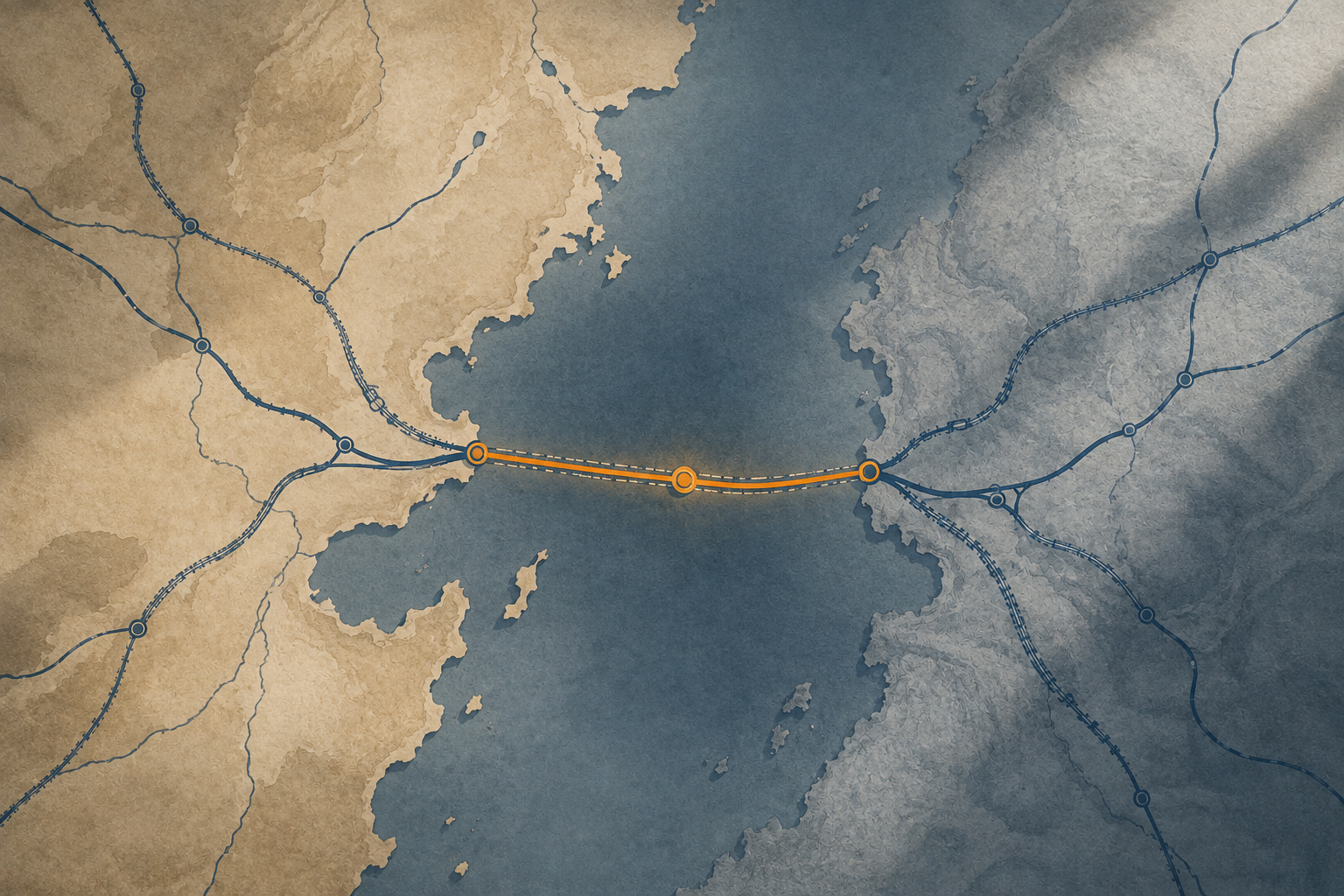
Ilham Aliyev and Shavkat Mirziyoyev signed a Treaty on Eternal Friendship in Tashkent on Sunday and chaired the third session of their Supreme Interstate Council. The document that travels furthest is procedural: Azerbaijan's full participation in the Consultative Meetings of Central Asian heads of state, a format that now runs across the Caspian.
Exit polls give Kazakhstan a five-party Kurultai, and the government prepares to resign
Kazakhstan's first Kurultai election closed on Sunday with turnout of 74.19% and every published exit poll giving Adilet about 7 votes in 10. The official result is due by 30 August; the appointments that follow it, a resigning cabinet and the country's first vice-president, are due within days of the count.

Yerevan promises everyone a deepening, and Moscow sends the first invoice
The programme Armenia's cabinet takes up on Thursday lists partners from Washington to the EAEU for deeper relations, all at once. One of those partners has already put a price on its line: Rosselkhoznadzor is asking for inspection results and a written compliance programme.

The Middle Corridor is one row in Washington's tariff table
Caucasus and Central Asia holds 4 names together: Azerbaijan, Georgia, Kazakhstan and Uzbekistan, filed under Belt-and-Road Overland Nodes. That label does more work than any of the coverage that trickled into regional media this week.

Moscow answers Armenia's trade complaint with a calendar
Nikol Pashinyan named the Russian import restrictions at the Eurasian Intergovernmental Council on Friday. Russia replied on Tuesday. The reply came from the foreign ministry, and it carried three dates.

Armenia brings the Russian import bans to the union's own table
Nikol Pashinyan told the four other governments of the Eurasian Economic Union on Friday that Russian restrictions on Armenian goods are feeding a negative view of the union inside Armenia. He came with figures: $319 million paid in during 2025, $175 million received back.

Pashinyan calls the union paralyzed
Armenia’s prime minister said on Thursday the Eurasian Economic Union is “de facto paralyzed”, his hardest wording since Russia began closing its market to Armenian goods in May. The union’s core promise, free movement of goods, is now disputed in public by one of its five members.

Kazakhstan takes the tanker attacks to the SCO table
Foreign minister Yermek Kosherbayev told the Shanghai Cooperation Organisation’s ministerial council on Friday that attacks on oil infrastructure threaten the durability of trade relations and supply chains. Astana has carried this month’s crisis onto a multilateral platform, into a room that includes Russia, China, India, Iran and Pakistan.