Search

The World Bank's new Tajikistan programme replaces grants with credits from July and rates its own risk as high
The Bank's Country Partnership Framework for fiscal years 2026 to 2032, which its board discussed on 3 June and Asia-Plus read in full on Friday, sets an indicative $1 billion to $1.2 billion of IDA money over 7 years, moves the country from IDA grants to IDA credits from fiscal year 2027, and assesses the overall risk of the programme as high. On the Bank's calendar fiscal year 2027 began on 1 July 2026. The document is 3 months old; the terms in it are already running.

Barki Tojik books a 2.45 billion somoni profit made of currency gains while owing 8.36 billion to the plants that power it
The 2025 accounts of Tajikistan's power utility, published by the energy ministry and read by Asia-Plus on Thursday, show a net operating profit of 2.45 billion somoni, $265 million, after a loss of 1.6 billion in 2024, and the line that made the difference is 2.93 billion somoni of net income from foreign-currency operations. Beneath it sit 29.3 billion somoni of accumulated losses, 23.26 billion of financial obligations and 8.36 billion owed to the generators, Rogun among them. The auditor kept its warning.

The UN's debt expert asks Dushanbe for the sums behind its projects as the grant era ends in 2027
Attiya Waris, the UN independent expert on foreign debt, ended a 12-day visit to Tajikistan on 31 August with a statement that reached the English-language wires through Eurasianet on 8 September: the government's actions “are not sufficiently visible to the public”, fiscal decisions “should be a transparent and participatory process”, the state should “prepare a cost-benefit analysis of all the government projects”, and from 2027 the country “will move from grant-based financing to concessional lending”. The latest poverty rate she cites is from 2018. Eight days after her statement, the president read the nation a ledger in which GDP had grown almost 100 times.

Ashgabat tells a UN committee that drought is its greatest risk, and lists more cotton as its first short-term task
In its reply to the UN Committee on Economic, Social and Cultural Rights, Turkmenistan's government writes that drought carries the greatest threat to the country's socio-economic welfare, that low-water years on the Amu Darya and the Murghab are becoming more frequent, and that faster glacier melt may raise the demand for irrigation water and leave the Amu Darya basin with a substantial deficit by 2050, with a serious effect on the yield of key crops such as cotton. In the next paragraph, under the heading of the short-term outlook, the same section of the document lists an increase in cotton output as the first task, on the president's instruction of 2025. CAW has read the document, which turkmen.news reported on Wednesday.

Georgia promises to double its ports by 2032 for a corridor whose shallowest link is on the other sea
Georgia's sea ports and terminals handled 13.7 million tonnes in the first 8 months of 2026, 24% more than a year earlier and the best figure in ten years, the economy minister told the Georgia International Maritime Forum in Batumi. The prime minister, at the same opening, set a ten-year target: railway capacity doubled, port capacity doubled, airport capacity tripled, about $7 billion by 2032. The route's narrowest section runs across Azerbaijan and the Caspian, at a Kazakh quay whose fenders are broken and whose water is falling, and there the only dated commitment is a dredging contract.

Kyrgyzstan puts a 74.5 billion som price on its melting glaciers
A decree signed by President Sadyr Japarov creates a fund for the protection of Kyrgyzstan's glaciers and Lake Issyk-Kul, 24.kg reported on Tuesday morning, five days after the environment ministry published a draft National Adaptation Plan to 2035 costed at 74.5 billion som ($852 million), 54% of it expected from foreign grants and climate funds. The decree gives the cabinet until 1 October to say what the fund is and where its money comes from.

Mongolia's premier reaches into the coal company's profit for the pension rise, and the auditor puts the deficit at 2% of GDP
Nyam-Osoryn Uchral said on Monday, as the State Great Khural's extraordinary session opened on the budget amendment, that this year's pension and wage increases will be paid with ₮1.5 trillion ($417 million) taken from Erdenes Tavan Tolgoi as a dividend, through an amendment to the law that keeps state companies' dividends out of the budget. On Tuesday the general auditor told the same chamber that the package adds ₮998 billion of spending with no new revenue and fails the fiscal rule's primary-balance test.

Mongolia's parliament opens a budget rewrite that turns a 57% export jump into pensions and pay rises
The State Great Khural opened its extraordinary session at 10:02 on Monday with 64.3% of its members in the hall and one package before it: the amendment to the 2026 budget that the government submitted on 20 August. In the parliament's own summary the case is four numbers. The economy grew 7.6% over seven months, exports reached $12 billion, up 57%, and the government wants ₮250,000 ($70) a month more for 435,000 pensioners and 20 to 50% more for 149,000 state employees. Both increases are permanent. Both begin in the year's last two months, and the full bill arrives in 2027, the year the government's own draft budget suspends the spending cap.

Kazakhstan's central bank forecasts at $89 oil, and names next year's fiscal stimulus as the limit on its cuts
The National Bank cut its base rate to 16.25% on Friday and told the market why the room below it is limited: next year's budget will spend more, and the extra comes from the National Fund. The bank's own forecast runs on $89 oil this year. The budget law now in force was written at $60.

Kazakhstan's central bank decides with its first sub-10% print and Brent 58% above the budget's price
The National Bank of Kazakhstan announces its base-rate decision at 12:00 Astana time on Friday with August inflation at 9.8%, the first reading under 10% since the bank began cutting in June, and Brent at $95. The budget the bank is asked to protect was written at $60 a barrel and 540 tenge to the dollar; the market has delivered $95 and 456.

Baku's fuel for Armenia nears 20,000 tonnes, and every wagon still goes through Georgia
Another 17 tank wagons of Azerbaijani diesel leave Baku's Bilajari yard for the Georgian border today. The running total the Baku press prints, near 15,000 tonnes of diesel and 5,000 of petrol, is small against Armenia's import book and large as a fact: the peace dividend is counted in wagons, and its only track runs through a third country.

The remittance machine gets a new price list
From 1 September a migrant in Moscow carries a phone that reports where he sleeps, pays 10,000 roubles a month for the right to work, and sends money home over rails the EU has started to sanction. The money keeps coming. What changed is what each dollar of it now costs.

The rule leaves, the money stays
COP17 closed with $1.3 billion in restoration and drought finance and no drought framework. The instrument fight moves to Egypt in 2028, and Central Asia spends the pause competing for discretionary money it helped argue into existence.

Central Asia puts its law up for rent
Three states have now built four enclaves where their own law steps aside for England's, on leases running to 2066, 2074, 2076 and the year 2100. The rents are real, the tenants are arriving slowly, and the length of the leases is the most honest document the region has published about itself.

The Kokzhide file opens, and the water tests positive at all five operators
A court order has pried loose the state's own hydrogeology report on Kokzhide, Kazakhstan's largest reserve of fresh groundwater. It shows oil products above permitted levels at wells of every company drilling there.

At the drought conference, the money moves and the rule does not
The UN desertification conference in Ulaanbaatar marked its Water Day on 25 August. The Asian Development Bank announced a target the same day: at least $2 billion by 2035 for land restoration across Asia and the Pacific. The one text at that conference that would bind anybody, a drought regime, is deadlocked with three days left.

Kazakhstan's cabinet is ordered out, and it plans the next 3 years
The government President Tokayev has told to resign spent Tuesday morning approving Kazakhstan's economic forecast for 2027 to 2029: growth above 5%, exports rising to $88.5 billion, and 5 trillion tenge of targeted National Fund money. The numbers will outlive the cabinet that wrote them.

Mongolia's mid-year budget spends the money its provinces never did
The government has asked parliament to raise this year's spending ceiling by ₮998 billion ($277 million), all of it unspent balances sitting in provincial accounts, and says it has saved ₮1.4 trillion elsewhere to pay wages, pensions and energy relief. The deficit it amends had already doubled by July.

Uzbekistan charters an English-law enclave to the year 2100
Mirziyoyev has signed the law creating Enterprise Uzbekistan, a digital-technology jurisdiction with zero taxes on export activity, English common law and its own commercial court, guaranteed for 74 years. Central Asia's governments are building a family of imported-law enclaves, and Tashkent's is chartered the longest.
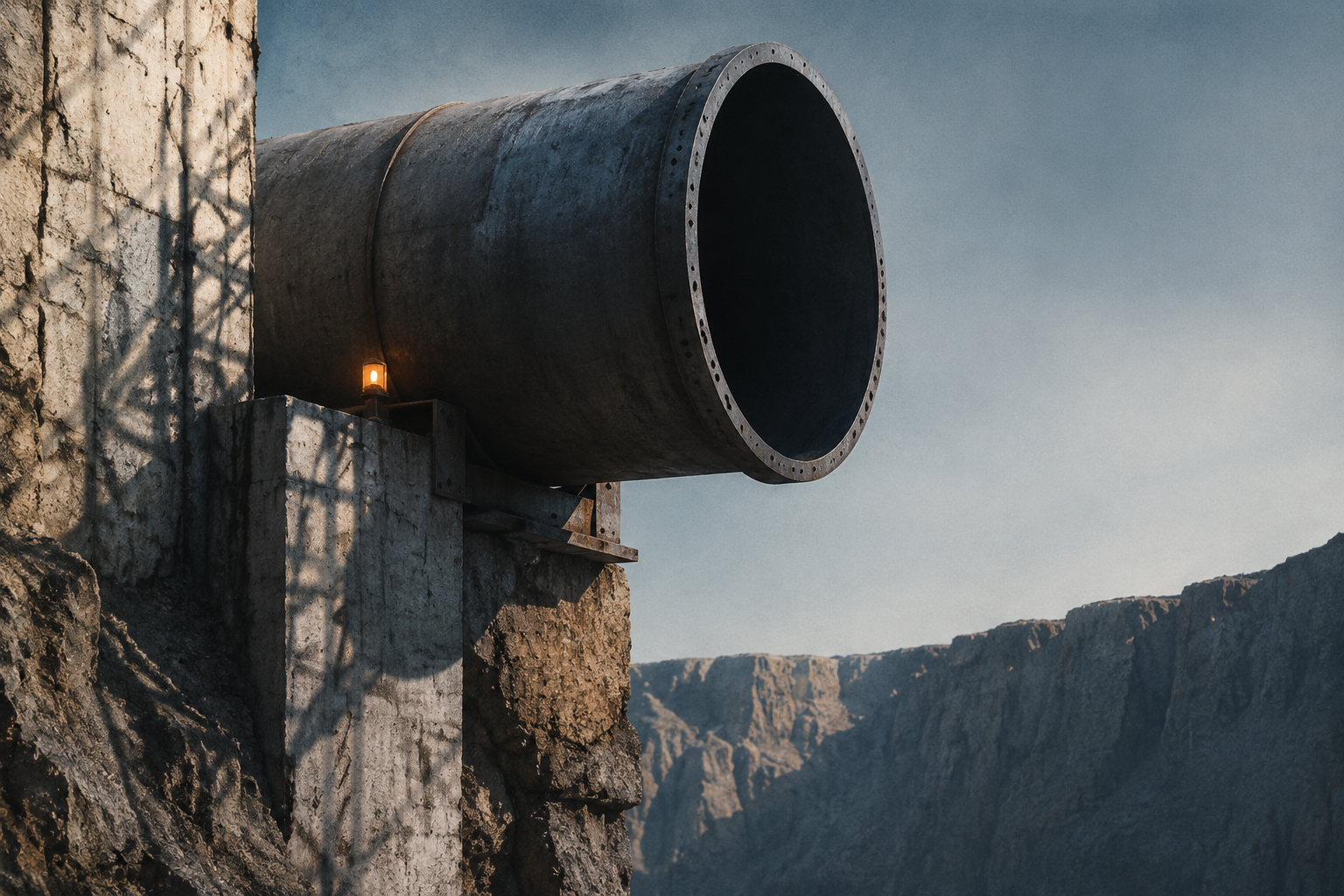
Tajikistan's new B+ is priced against a $5.8 billion dam
S&P raised Tajikistan to B+ on 14 August, its verdict on five years in which the economy grew about 8.5% a year and reserves rose to $6.4 billion. In the same package its analysts put the remaining cost of Rogun at $5.8 billion. The upgrade and the bill belong in one sentence.