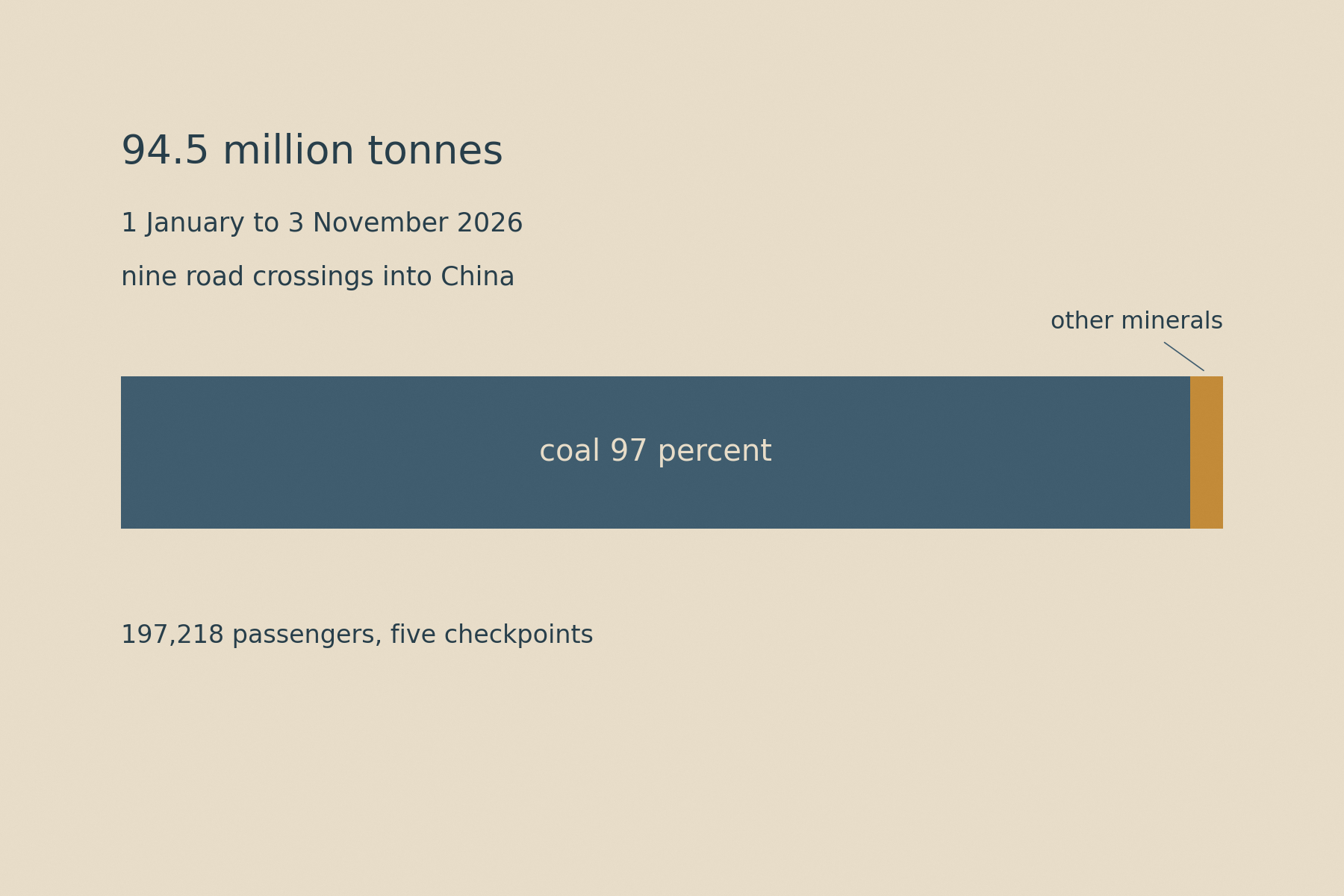
Other mineral products made up 2% of the total, Montsame writes. In addition, 197,218 passengers crossed the border through five bilateral checkpoints. Munkhnasan, who heads the road transport policy department at the Ministry of Road and Transport, opened the meeting by saying that growing trade had raised the need to expand transport cooperation and improve conditions for carriers.
Mongolia’s side listed what it is doing: joining international road transport agreements, improving road and service infrastructure, digitising some services, developing checkpoints and connecting settlements to border ports with paved roads. The Chinese side called for a comprehensive review of how Mongolian carriers use international road transport permits, explained its need for additional permits and proposed to protect both sides’ carriers and keep the market orderly.
The practical knot is a card. Mongolian trucks entering China must register and use an access card to enter customs control zones, and each card is valid only at the checkpoint that issued it, so a carrier switching crossings must cancel one card and obtain another. China’s General Administration of Customs oversees the cards. The Chinese side asked Mongolia for vehicle details, card numbers and entry and exit times to help resolve the problem.
Also on the table were higher coal volumes through Gashuunsukhait-Gantsmod, road tolls in China and the exchange of road transport permits for 2027.
On the mine side, Montsame reported on Thursday that Oyu Tolgoi’s copper concentrate exports, restricted in recent days, have returned to normal and that the company is stepping up transport to clear accumulated concentrate and meet its annual export target. The agency dates the company’s statement 4 October 2026, a month before its own report. It gives the company’s name as Tolgoi LLC in one line.