The Insider counted the drawdown on 31 July: 71,600 tonnes of AI-92 in the country’s tanks three weeks earlier, 37,000 by the end of the month, 17 days of normal use. Diesel stood at 91,000 tonnes, or 23 days. Drivers described five and six hours in line, some staying overnight.
Formally nothing has been cut off: Russia’s export decree exempts supplies under intergovernmental agreements, and Mongolia’s contracts, by The Insider’s account, run through one. The squeeze arrives through price: Rosneft moved in July from the fixed $705 a tonne to exchange-linked pricing, and AI-92 prices rose by 250 to 300 tugrik a litre. About 95% of the country’s fuel comes from Russia.
Formally nothing has been cut off. The squeeze arrives through price.
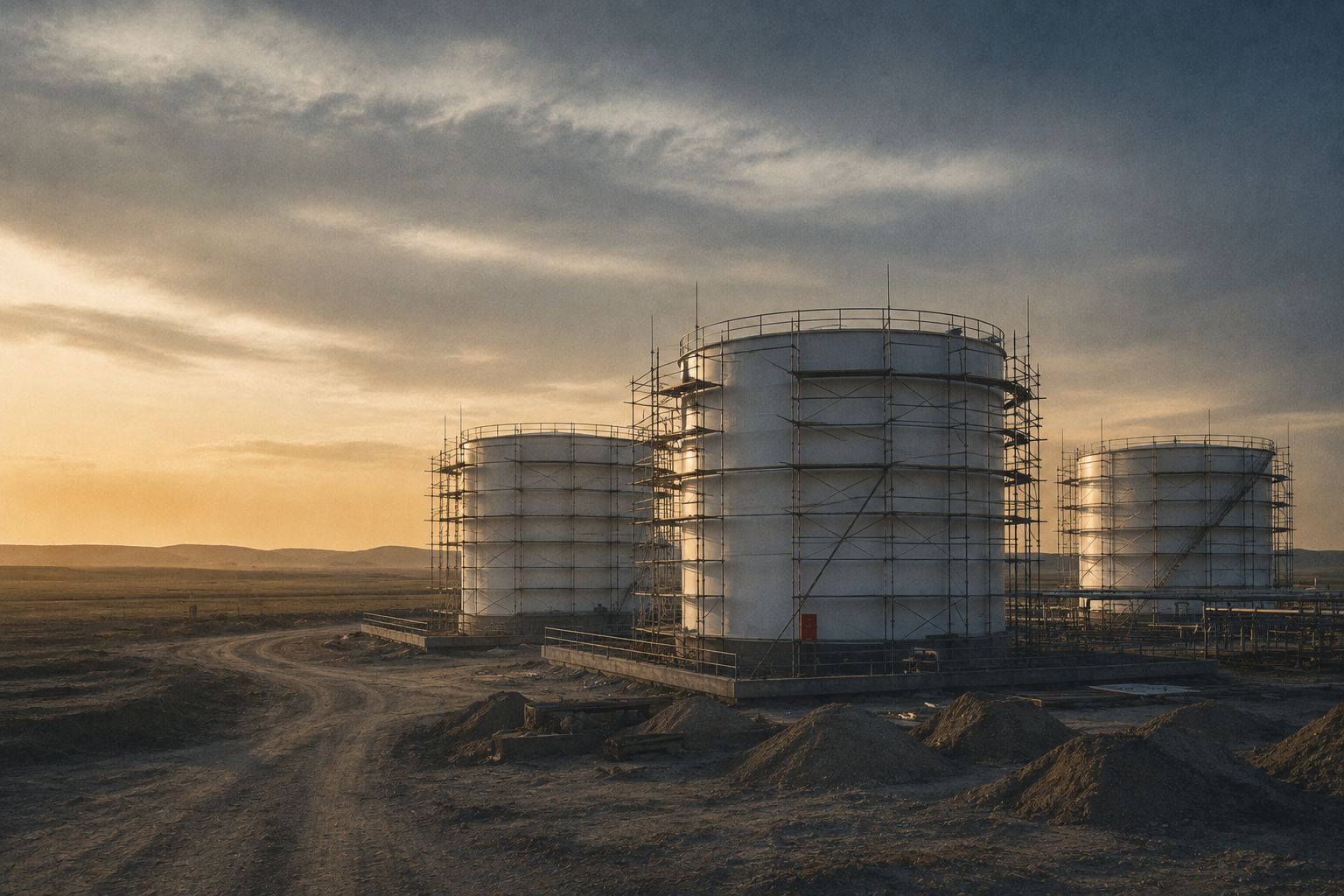
The state’s response is the region’s newest buffer programme. Industry and mineral resources minister Gongoryn Damdinnam spent 29 July inspecting tank farms under construction in Ulaanbaatar, Darkhan-Uul, Orkhon, Bayan-Ölgii and Ömnögovi: 150,000 cubic metres of new capacity by the end of this year, 300,000 by August 2027, and reserves covering three months of normal consumption by 2028. Banks have approved financing for 22 storage sites of 250,000 tonnes, on The Insider’s count, with build times of four to 12 months.
The refinery that would change the arithmetic, the Indian-financed plant at 1.5 million tonnes a year, is promised for 2028 at the earliest. Nearer term the clock is COP17: 4,127 registered delegates land in Ulaanbaatar from 17 August, into a city rationing traffic by plate number and, for now, petrol by patience.