On Monday in Beijing, Kazakhstan’s foreign minister put his signature to the convention of the International Organization for Mediation, a new dispute-resolution body headquartered in Hong Kong. The charter’s most distinctive feature is disarming in the literal sense: its mediators cannot impose an outcome on anyone. Kazakhstan’s actual money disputes, the multi-billion-dollar arbitration fights with the Kashagan and Karachaganak oil consortia, stayed exactly where they were, in Western arbitration, Geneva among the venues. Astana has joined a body that cannot compel while keeping its cases before tribunals that can.
One signature is a curiosity. July has supplied three, and a mirror.
Last Friday in Tashkent, the president signed a law of constitutional rank creating a financial district where the legislation and judicial precedents of England and Wales apply, a local regulator’s acts outrank national law inside the fence, a court may seat foreign judges, and the tax holiday is advertised out to the year 2076. At the project’s launch presentation, seven articles of the Criminal Code were listed as not applying on the territory. Uzbekistan’s parliament fought over the text, rejected it once, reworked it through a conciliation commission and passed it: a real legislative struggle, spent on deciding exactly how much of someone else’s law to import.
Bishkek got there earlier the same month, chartering its Tamchy zone on Issyk-Kul: English law and zero tax for 49 years, on a lake five time zones from the Inns of Court. Astana’s own enclave has run on the same architecture since 2018. Three states now retail the same product, a common-law harbor behind a national fence, to the same pool of nervous capital.
The region has spent a decade learning that loyalty to one freight route is a vulnerability. The Middle Corridor exists because Russian transit failed the test of events; the southern route to the Gulf is being assembled because no single line can be trusted with everything; the doctrine is multiple routes, every gate kept open, dependency on none. July’s legal season is the same doctrine transposed one register up. English law for the capital markets. Chinese mediation for the relationship with the biggest neighbor. Geneva for the oil money already sunk. National courts for the domestic audience. Jurisdiction as logistics: choose the route per cargo, and never, under any circumstances, ship everything one way.
West of the Caspian, the same doctrine is running its stress test in reverse. In July 2025 an emergency arbitrator in Stockholm ordered Armenia to refrain from steps toward expropriating its power grid. Yerevan examined the order and pronounced it non-binding, national law taking priority. The price under discussion completes the picture: by documents obtained by RFE/RL, the state’s offer for the grid netted out near $360,000 once returned dividends were subtracted, against roughly $900 million its owner says he invested; the government has not confirmed the figures. On Tuesday an Armenian court declined to accept the grid owner’s property suit, days before the government decision that suit would have complicated; the takeover decision is expected within the month. Nothing in this sequence is lawless. Every step has a statute under it. That is precisely the lesson: foreign law is binding infrastructure right up until it binds, at which point it turns out to have been a route all along, and routes can be closed by the same authority that opened them.
The investors these signatures are addressed to gave their answer on Thursday, when Kazakhstan’s administration counted more than 70 agreements worth over $15 billion signed in the course of the president’s China visit. The market, for now, prices legal ambiguity at zero and takes the discounts. But the two numbers of the week deserve to be read together. The promise written into Tashkent’s new law runs 50 years, to 2076. The Stockholm order Yerevan set aside is 12 months old. Somewhere between those two figures lies the actual shelf life of imported law in the spaces between empires, and every signatory of the past two weeks has bet a different point on that line.
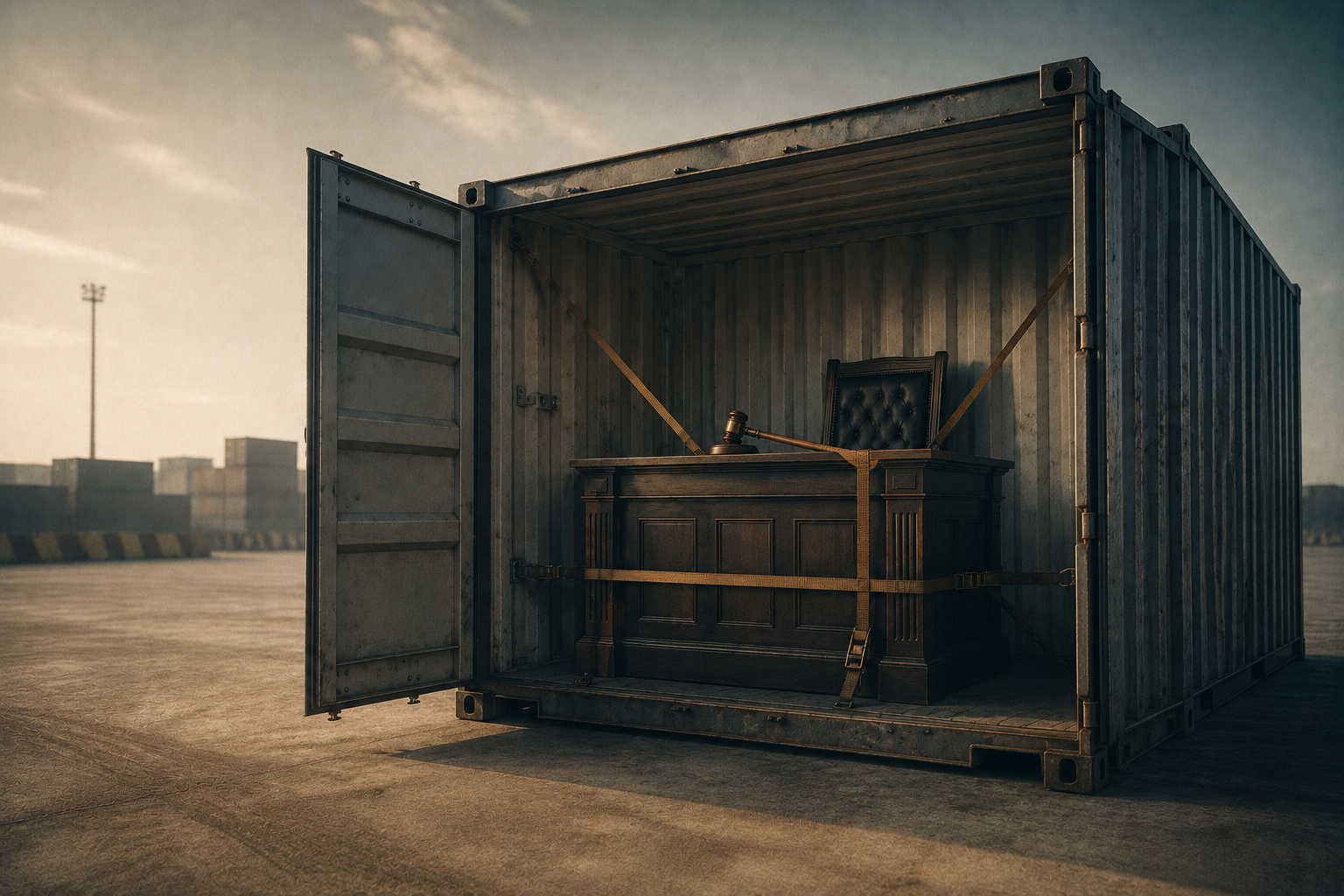
The convenience of law that arrives by container is the one no prospectus prints: it can leave by one.
Peter Lidovsky writes on Eurasia and the politics of the spaces between empires. He contributes a weekly column to Central Asia Wire. The views expressed are his own.