The council met on 2 July under the theme “Artificial Intelligence and Digital Sovereignty: Developing National Technological Ecosystems in Kazakhstan.” Tokayev told investors the economy grew 6.5% in 2025, by his account despite an unfavourable external environment, and walked through a technology agenda: the Smart Cargo platform digitising transport corridors, digital twins and AI-driven predictive maintenance in oil and gas, and historical geological archives converted into machine-readable data for exploration.
The minerals leg got its own institution: a Regional Research Centre for Rare Earth Metals in Astana, meant to hand investors reliable geological information. On the margins, Tokayev met foreign executives including Turkey’s Anadolu Group, which discussed export-oriented agro-industrial projects; the Islamic Development Bank chairman attended the session.
The sequence matters more than the session. In the last week of June, Kazakhstan joined the US-led Pax Silica bloc on AI and critical minerals, watched SuperX scope a 1 GW data centre, and broke ground on Masdar’s $1.4 billion wind farm, a project explicitly tied to future data-centre demand. The council agenda turns that run into a formal doctrine: bring the compute, the processing and the algorithms here.
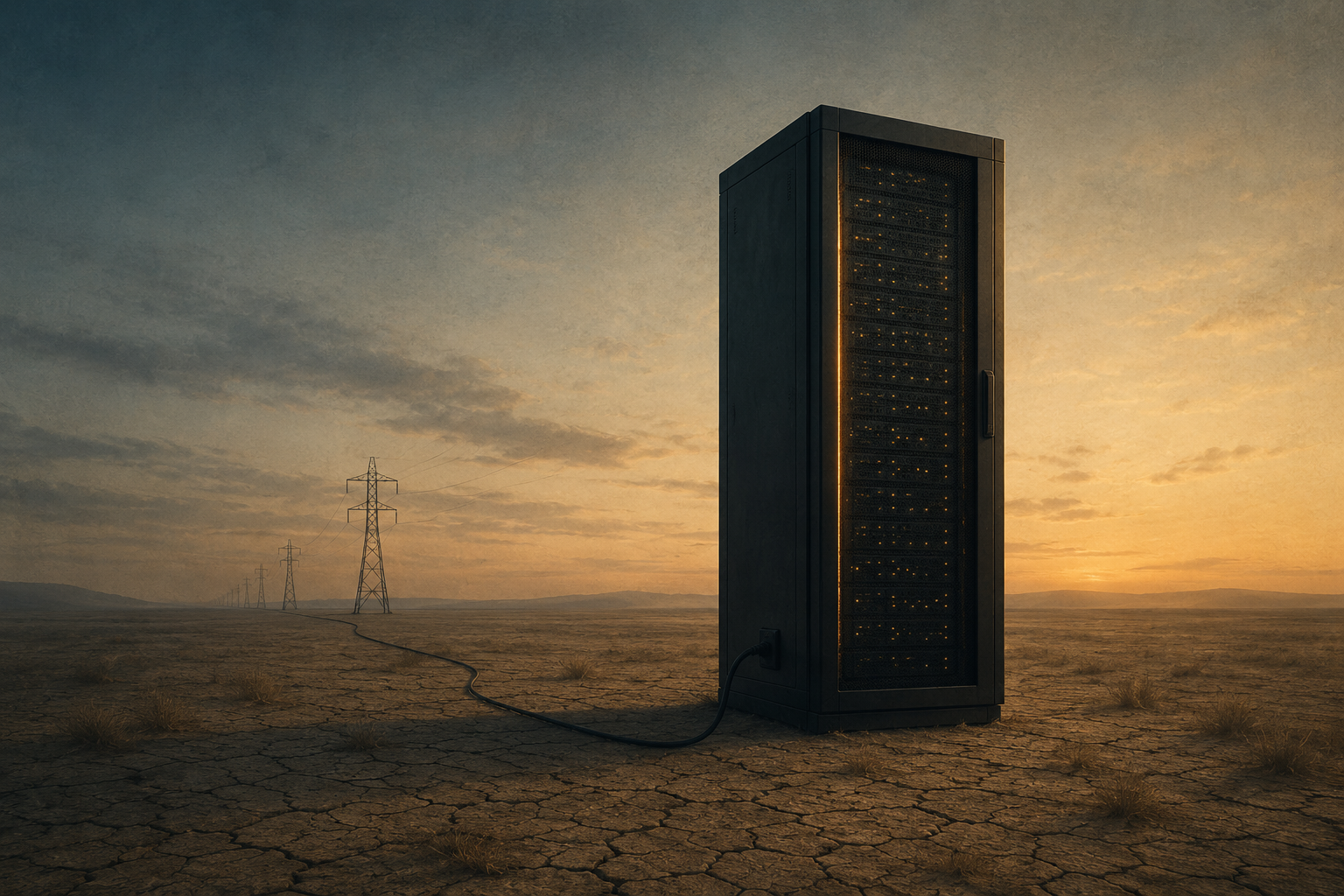
Announced computing is measured in gigawatts. Delivered generation is still measured in memoranda.
Every part of that doctrine lands on the same electricity system. The announced data-centre projects are counted in gigawatts; the generation meant to carry them arrives in stages, and the grid already runs tight in the south in high summer. The gap between those two clocks is where the agenda will succeed or stall.
Who benefits is clear enough: investors get geological data, tax stability and a president selling predictability. What changes next is the test we have applied since Pax Silica week: whether the megawatts arrive before the promised gigawatts of compute.