President Kassym-Jomart Tokayev met European Council President Antonio Costa and Commission President Ursula von der Leyen in Brussels on 23 June, and the two sides adopted a joint statement and signed five agreements. The EU called Kazakhstan a global gateway. The substance sat in the annexes.
Two of the five are concrete. Air Astana agreed to buy up to 50 Airbus A320neo and A321neo aircraft, a deal the EU valued at €7.145 billion. A horizontal aviation agreement lets carriers from any of 17 member states fly between the EU and Kazakhstan, widening a market that national-ownership rules had kept narrow.
The other three point at the future and commit less. The EIB will finance road rehabilitation along the Middle Corridor, the EBRD will back transport digitalization, and the parties commissioned a feasibility study for a centre of excellence in minerals and metals. A feasibility study is not a plant.
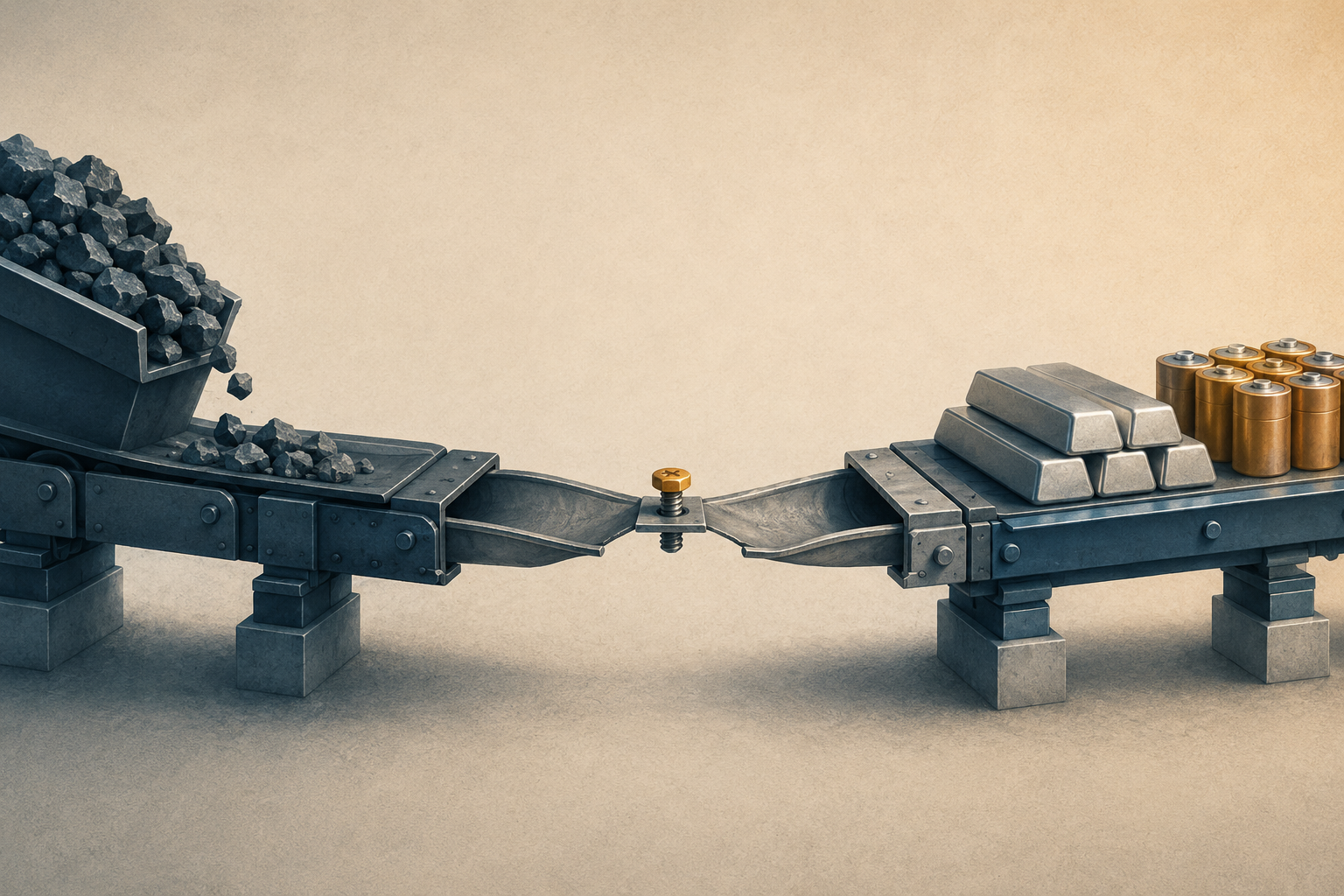
The minerals pitch was the centrepiece. Tokayev told the Kazakhstan-EU roundtable that the country can supply 21 of the 34 raw materials on the EU’s critical list, and he offered an off-take model: European firms invest in processing inside Kazakhstan, take the output, and both sides share the value. He floated a regional research centre for rare earth metals. Von der Leyen pointed to one graphite project already designated strategic, with enough output for around 100,000 electric-vehicle batteries a year.
This is the same offer Astana has made since it signed a raw-materials partnership with Brussels in 2022, refreshed by a 2025 to 2026 roadmap. The wording rarely changes: process the ore at home, keep the value chain inside the country. Delivery is the variable. Across the region, roughly a third of the deals announced at investment forums reach implementation, and EU and Kazakh minerals cooperation has produced more roadmaps than refineries.
The Airbus order has a delivery schedule. The rare earth centre has a feasibility study.
Follow the incentive and the asymmetry shows. Europe wants what Kazakhstan sells: Kazakh crude covered close to 13% of the EU market last year, and the country supplies about 16% of the bloc’s natural uranium as Brussels works to cut Russian fuel out of its supply chain. Tokayev named the Caspian Pipeline Consortium a strategic priority, a reminder that most of that oil still crosses Russian territory to reach the sea. The supply security Europe is buying gives Astana room to shape the terms.
The timing carries its own message. The statement acknowledged Kazakhstan’s new constitution, approved by referendum in March and in force on 1 July, handing Astana an external endorsement eight days before the document takes effect. Ahead of the visit, two rights groups wrote to Costa, von der Leyen and Kaja Kallas asking that human rights stay on the agenda. The joint statement reached for supply chains and connectivity first. Conditionality is quietly giving way to supply security.
For Kazakhstan the logic is consistent with the rest of its foreign policy: add a European leg that depends on neither Moscow nor Beijing, and bank the validation at home. For Europe it is a hedge against Russian energy and Chinese mineral dominance. The open question is the one the ceremony did not answer. Does the processing move onshore, or does Kazakhstan keep exporting ore and uranium with a better logo on the paperwork.