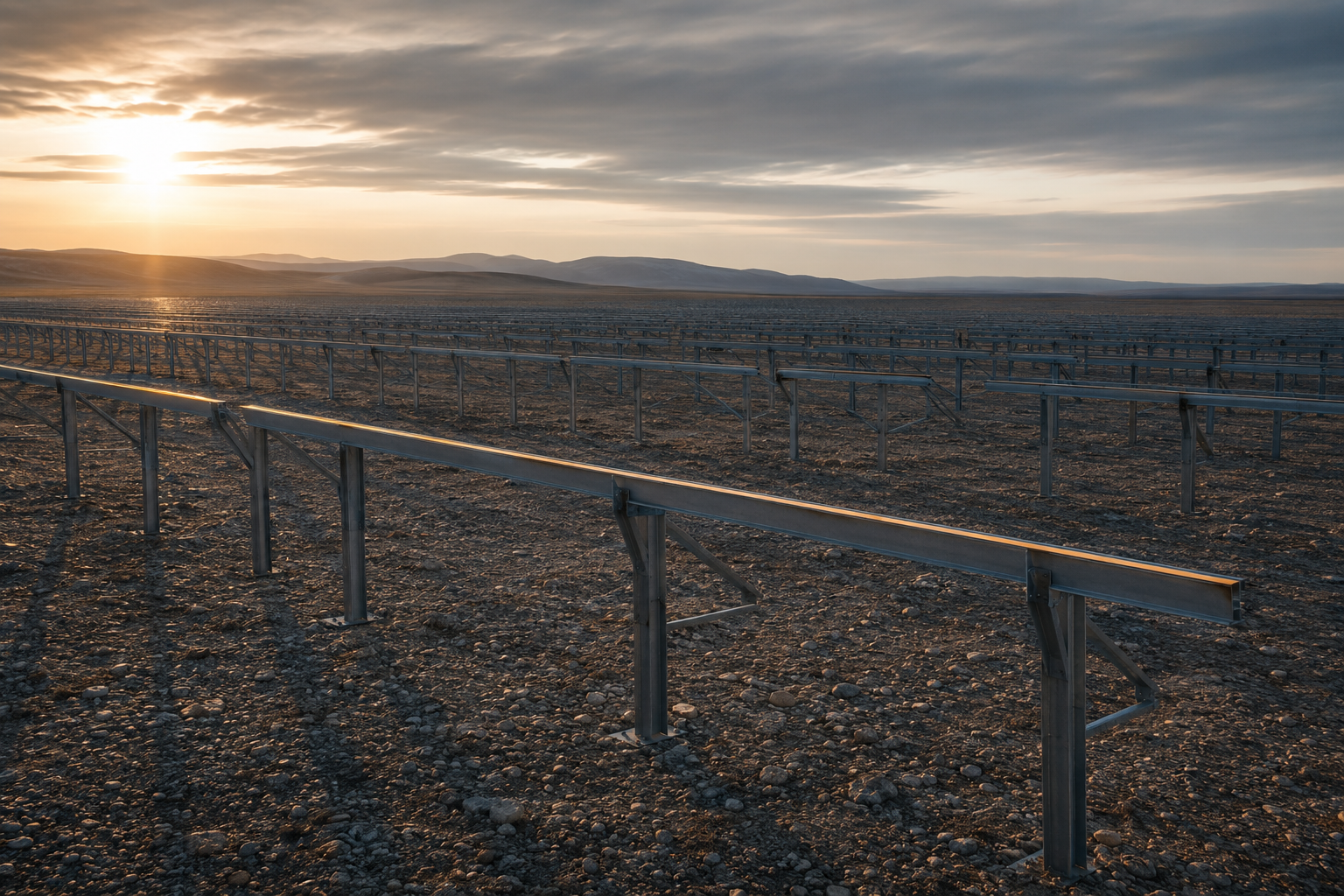
Daler Juma, Minister of Energy and Water Resources, met Li Yahun, vice-president of China Energy Overseas Investment, on a 200 MW solar plant in northern Tajikistan. No investment figure and no timeline were given.
The same day he met Mao Gohuo of China Gezhouba Group International Engineering on two hydropower plants on the Zarafshan: Aini at 160 MW and Yavan at 100 MW, a combined installed capacity of 260 MW. Construction periods and costs have not been named. Both projects sit with TAUZ Hydro, the Tajik-Uzbek joint venture set up in 2021 with equal stakes.
That is 460 MW of prospective Chinese-built capacity discussed in a single working day, in a country that told the UN this month it draws about 98% of its electricity from hydropower.
The other dependency runs the other way. Russia supplied 72.3% of the fuel imported into and produced inside Tajikistan in the first half of 2026, against 0.5% from domestic refineries, and Moscow has extended its petrol export ban to the end of the year.
Generation and fuel are separate ledgers. New megawatts change what Tajikistan produces. What its trucks and generators burn arrives by a different route, from a different partner, under a different rule, and that is the exposure that reaches a pump in Dushanbe.