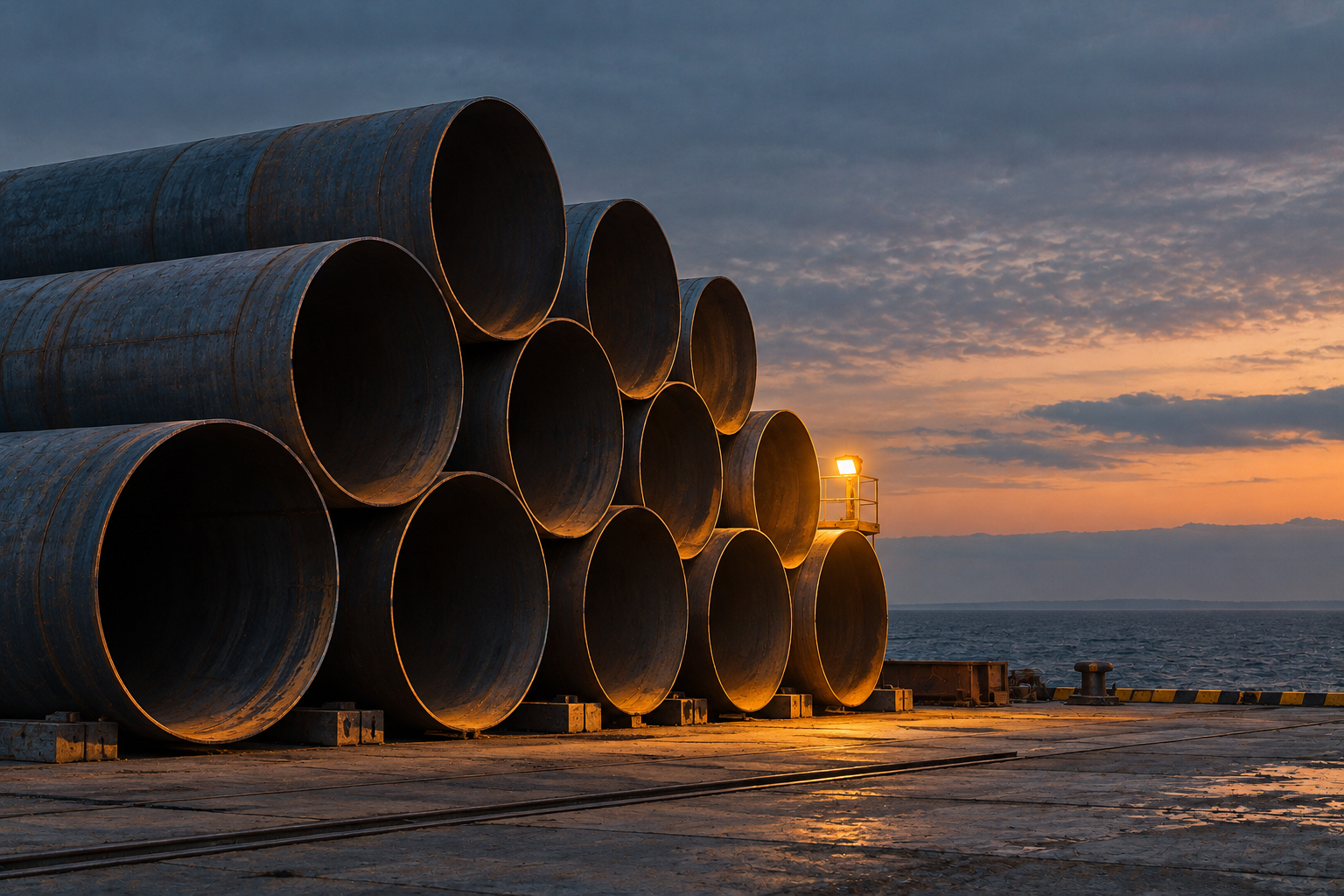
The work of the past few weeks was the transport and installation of four tubular piles that will anchor the jacket of the new platform, BP’s statement says. “The completion of this stage creates the basis for the installation of the jacket of the SDC platform in the first half of 2028,” the company wrote.
Each pile is about 70 metres long, 108 inches in diameter and 292 tonnes in weight, the largest-diameter piles BP has ever installed in the Caspian, and the subsea construction vessel Khankendi set them. A purpose-built 188-tonne subsea template held them upright, and the company used pile plugs for the first time in its operations in the region.
“The completion of this stage creates the basis for the installation of the jacket of the SDC platform in the first half of 2028,” the company wrote.
The project’s purpose is low-pressure gas: a mostly unmanned, electrically driven compression platform in 85 metres of water about three kilometres from Shah Deniz Bravo, with four compressors of 11 megawatts each, to compress gas from the Alpha and Bravo platforms before it goes to the Sangachal terminal. Construction is to be completed in 2029, with compression from Alpha in 2029 and from Bravo in 2030, and the project is to add about 50 billion cubic metres of gas and about 25 million barrels of condensate to the field’s output.
The same morning Report’s market source put Azeri Light at $118.53 a barrel, up $2.26 or 1.95%, and the FOB Ceyhan price at $107.67, against the $65 on which Azerbaijan’s 2026 budget is built. Brent’s December future stood at $109.92 on ICE at 09:43 Baku time, the agency’s separate print said, after six Houthi operations against Saudi targets in 48 hours.