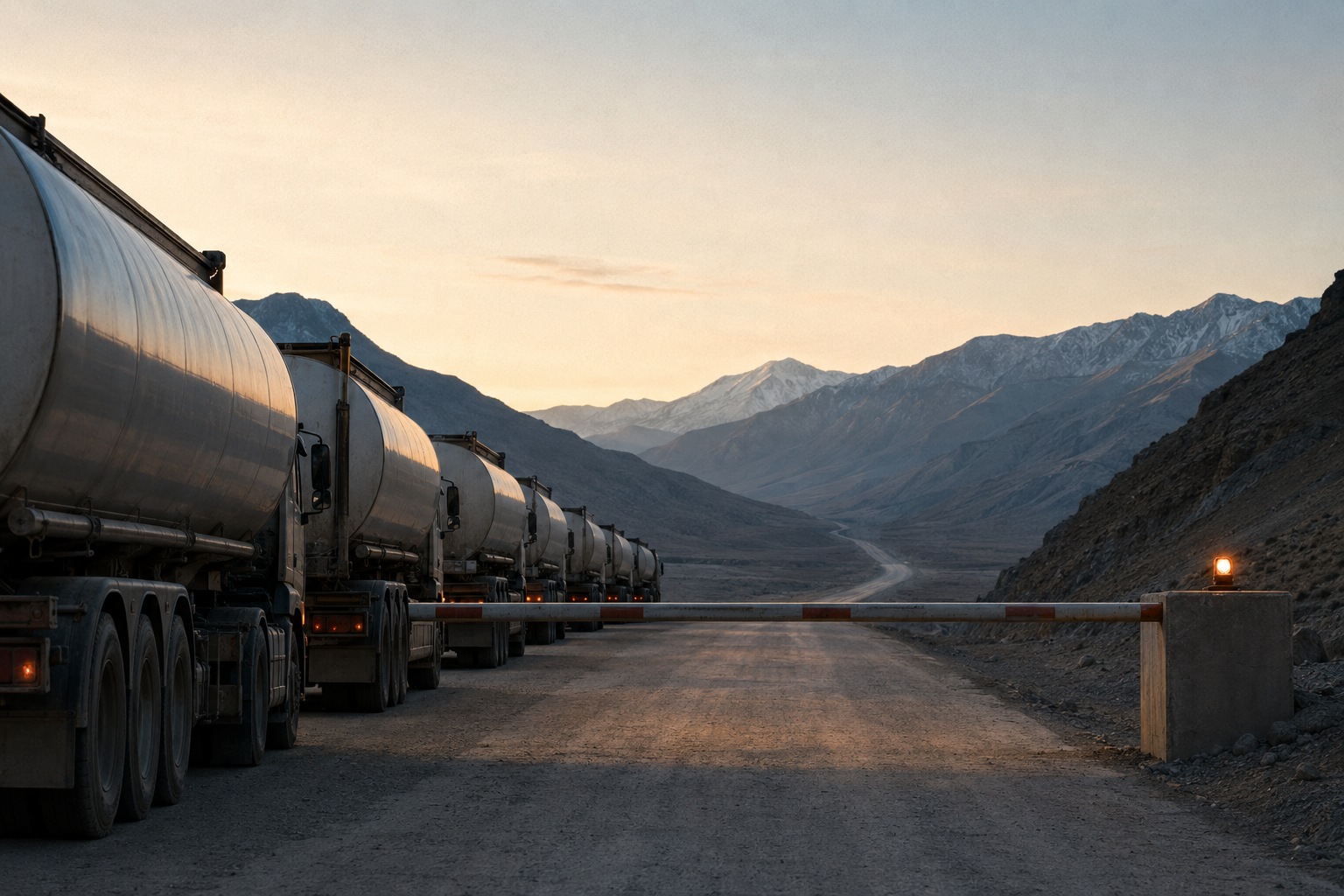
The minister said the first Chinese batch has left and is moving by road, which takes time; several Belarusian railcars have arrived and more are en route; and the question of transit through Russia, which had been open, is settled. The cabinet has told customs, tax, transport and energy agencies to clear a green corridor for these shipments.
The Kazakh fuel oil has a destination. It goes to the Junda refinery, the Chinese-owned plant at Kara-Balta, though the minister did not say which products will come out. Kazakhstan’s own ministry has floated two uses for those volumes: feedstock for AI-92 gasoline and K4 and K5 diesel, or fuel for power plants in the 2026 to 2027 heating season.
The Uzbek line is the newest shape. Kyrgyz oil products are to be sent to Uzbek refineries for processing and returned as finished fuel, a tolling relationship rather than a purchase.
Volumes and prices are undisclosed for the Chinese contract, which is where the significance sits. Watch three things: the first customs figures for Chinese fuel entering in August, whether the import subsidy survives its 30 September end date, and what the tolling arrangement costs Bishkek per ton compared with what Russian supply used to cost.