The ninth China-Eurasia Expo ran from 25 to 29 June in Urumqi, the capital of Xinjiang, with Kazakhstan and Pakistan named guests of honour, 49 countries represented and more than 3,000 companies. On the sidelines, Deputy Prime Minister Serik Zhumangarin met Chinese Vice Premier Ding Xuexiang, and the two set a goal of lifting bilateral trade toward $100 billion a year, close to double what 2026 is expected to bring.
The numbers behind the target show how far the relationship has already run. Kazakh-China trade hit a record $48.7 billion in 2025 and reached $22 billion in the first five months of 2026, up 27% on the year. More than half of it passes through Xinjiang. China now takes roughly a quarter of Kazakhstan’s foreign trade, and across the region, China’s trade with the five Central Asian states crossed $100 billion for the first time last year.
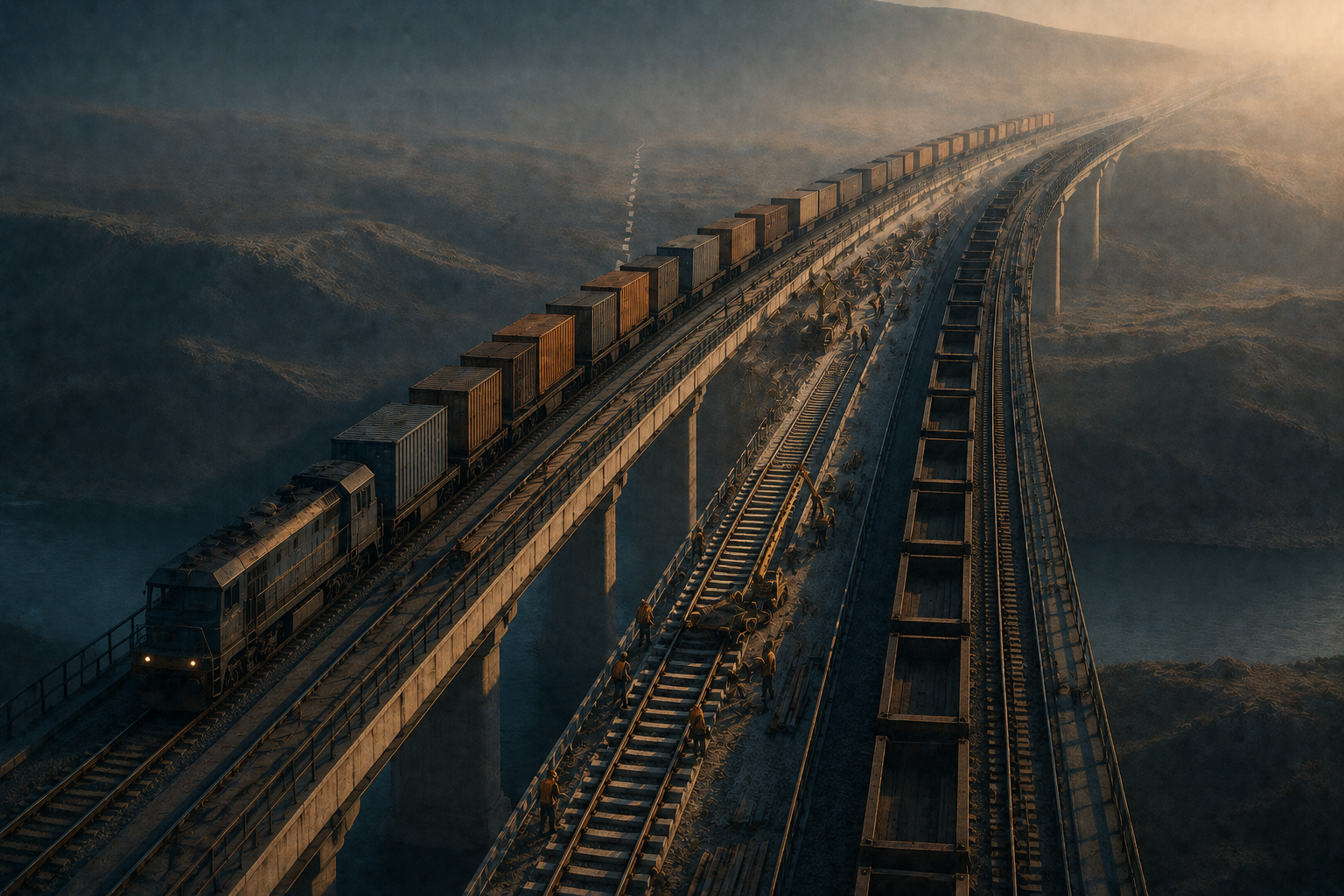
The infrastructure is being built to carry more. Zhumangarin said about 85% of all overland freight between China and Europe already moves through Kazakhstan, and that a new rail crossing at Bakhty-Ayagoz will lift the combined capacity of the two countries’ border checkpoints toward 100 million tonnes a year. Kazakhstan is the land bridge, and it is widening the bridge.
Kazakhstan is the land bridge, and it is widening the bridge.
The asymmetry is the part Astana keeps trying to fix. Chinese imports into Kazakhstan are growing faster than Kazakh exports the other way, and the trade is still weighted toward raw materials out and manufactured goods in. So Zhumangarin used Urumqi to make the pitch Kazakhstan now makes to everyone: localise. Build the factory here, process here, rather than ship the ore east and buy the product back. He also pressed on access for Kazakh farm goods, where China has approved 34 categories and is still weighing nine more, including chilled meat.
The small wins show what that looks like in practice, and how modest it still is. Kazakhstan’s trade office signed a pilot to put a few home-grown brands into a Xinjiang retail chain and sent a first 20-tonne shipment of pasta, tea, juice and confectionery into China. Set against $22 billion in five months, a 20-tonne lorry of pasta is a rounding error. It is also the thing Astana wants more of: finished Kazakh goods moving east, not only oil, copper and grain.
None of this is one-sided coercion. Kazakhstan chose the land-bridge role and earns well from it, and Ding talked up cooperation in the digital economy, AI and energy, the higher-value work Astana is chasing. The question is the balance. A trade heading for $100 billion, routed through Xinjiang, weighted toward Chinese manufactures and Kazakh raw materials, deepens a dependence even as it pays. The target is the easy part. Tilting the mix is the work.