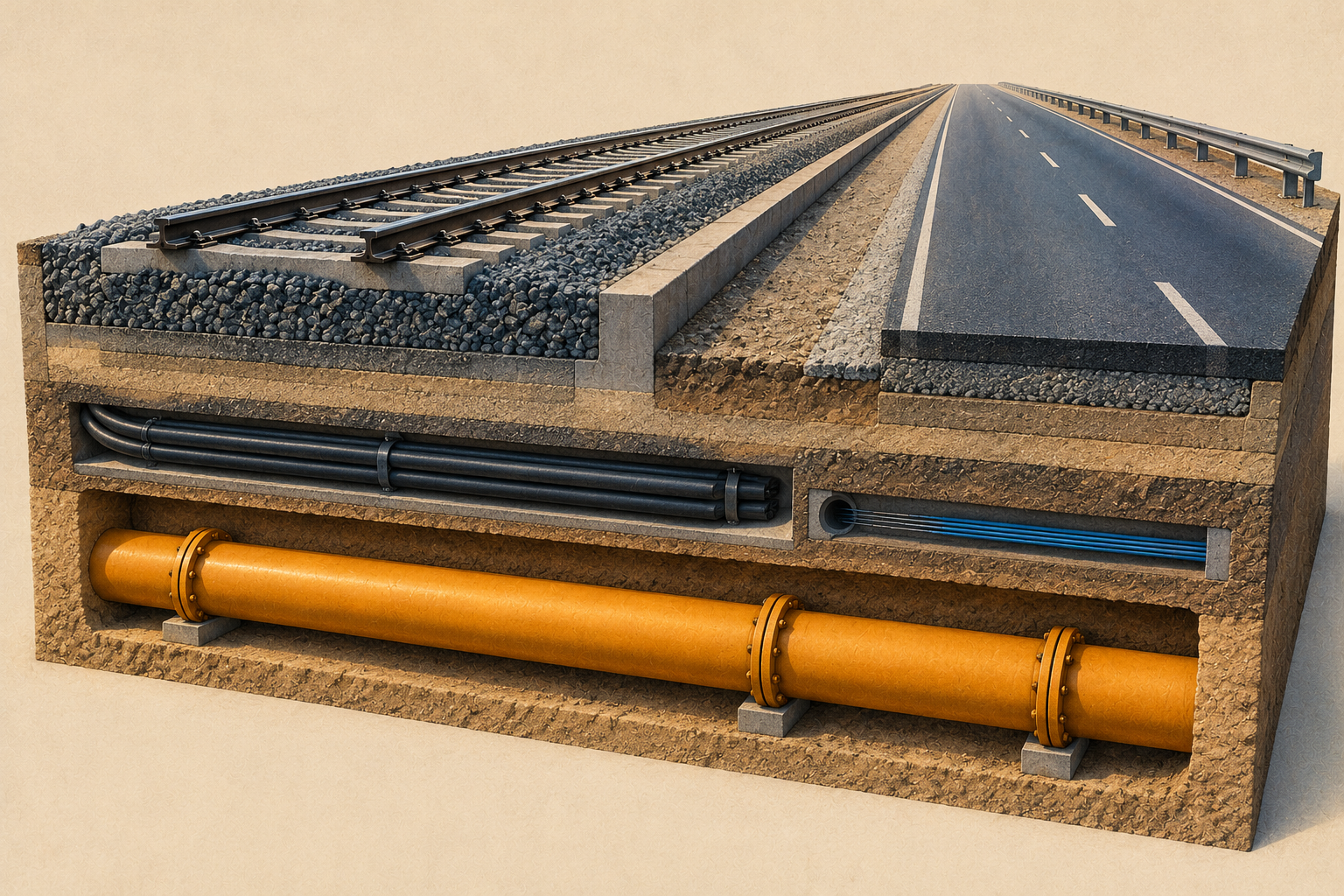
Lawmakers began debating the bill at a plenary sitting on 27 October, Armenpress reported at 13:04 Yerevan time. TRIPP, the Trump Route for International Peace and Prosperity, grows out of the Washington Declaration of 8 August 2025, and the agreement now before parliament sets the framework for building and running it.
Mirzoyan listed what the route may carry: a railway, highways, power transmission lines and fibre-optic cables, with oil and gas pipelines as a possibility. “All infrastructure that will operate on the territory of the Republic of Armenia will in no way undermine territorial integrity and will operate entirely under the sovereignty and within the jurisdiction of the Republic of Armenia,” he told the chamber.
The ownership split is the number Mirzoyan put before the chamber. Armenia will hold 26 percent of the TRIPP Development Company and the American side 74 percent for an initial 49 years, with the American stake held by a company that stays under US government ownership and management. The shareholders’ agreement and the company charter are still being negotiated.
“The parties have the opportunity to extend the term of cooperation by another 50 years, in which case the Republic of Armenia’s stake will automatically increase to 49%, without any additional investment, while the U.S. side will hold a 51% stake in the TRIPP Development Company,” Mirzoyan said.
The minister asked for votes from across the aisle. “This is one of those cases in which we can reasonably and justifiably expect the bill to receive not only the votes in favor of the ruling faction but also the positive positions and votes in favor of the opposition factions,” he said.
By 15:30 the Hayastan faction had answered. Its leader Anna Grigoryan said the faction would vote against. “On paper, it is considered a bilateral agreement, meaning that the two parties to the agreement are the Republic of Armenia and the United States. But in its essence, in its content, there is a third party, namely Azerbaijan,” she said.
Grigoryan said the United States gains a presence on the border with Iran and Azerbaijan gains a link between its main territory and Nakhchivan, and asked what Armenia receives in return. She also asked for clear calculations of the revenue Armenia expects and whether people and cargo would face equivalent border and customs conditions on both sides.
Strong Armenia took a different line. Its faction head Narek Karapetyan argued that TRIPP should not be implemented until the initialled peace treaty with Azerbaijan is signed, Armenpress reported at 16:58.
Speaker Ruben Rubinyan of Civil Contract turned that argument around. “If you insist that we should not implement this project in order to obtain a peace treaty, this means you think TRIPP is a bad project for Armenia. TRIPP is by no means a bad project for Armenia,” he said, adding that it is “very good that the implementation of TRIPP does not depend on the signing of the peace treaty”.
Rubinyan said the treaty is held up by a claim Azerbaijan is making as grounds for refusing to sign, a reference to Baku’s demand that Armenia amend its constitution. “We disagree with this claim and say that we are ready to sign it now,” he said.
Baku’s own account of the treaty arrived the same evening. President Ilham Aliyev said at the opening of the VII World Forum on Intercultural Dialogue in Baku, as APA reported at 19:55, that Azerbaijan had drafted the peace agreement initialled in the summer of 2025, that it was initialled at the White House with President Donald Trump taking part, and that Azerbaijan had been the treaty’s initiator.
Aliyev also said Azerbaijan has strategic partnership declarations or agreements with 10 EU member states, will host the summit of the Organisation of Islamic Cooperation next year and the European Political Community summit in 2028, and sealed the new situation in the South Caucasus “at the White House”.
Yerevan and Baku are describing the same treaty from opposite ends. In Yerevan the ruling party says the route can be built before the treaty is signed and names Baku’s claim as the obstacle to signing, while in Baku the president says the treaty is his side’s draft, sealed at the White House. No vote on the ratification bill had been reported by the morning of 28 October.