The law moved with the speed reserved for decisions already made. Rahmon submitted the draft to the lower house of parliament, the deputies passed it, and he signed it, all on the same day. State media framed the law as an expression of the president’s humane policy, timed to the anniversary of independence that Tajikistan will mark in September.
The arithmetic is substantial. Of the 18,038 people the law covers, 11,305 will be released from prison, from corrective institutions and from non-custodial penalties, and 6,733 will have their remaining terms cut. Women and minors are treated more leniently, as the amnesty laws here usually specify: of 507 women serving sentences, 248 go free and 259 have their terms reduced; of 134 minors, 99 are released. Implementing agencies have two months to carry the law out and report back to the president, and local authorities are told to find work for those released and school places for the children among them.
None of this is new in form. Tajikistan has passed amnesties at regular intervals for three decades, almost always tied to the constitution or to independence. The 2021 law reached some 16,000 people; the 2019 one, by the government’s own account, around 20,000. The driver is partly practical. The country’s prisons are crowded and unhealthy, and the state’s own human rights ombudsman has flagged the failure to provide the floor space per inmate that Tajik law requires, alongside high rates of tuberculosis and HIV. A periodic mass release is how the system relieves that pressure without reforming the courts that fill the cells.
What makes an amnesty worth reading closely is the list it leaves out. In March, Rahmon pardoned 897 prisoners. Human rights monitors noted that the group included not a single convicted journalist, civil activist or opposition politician. The pattern is consistent enough to be a policy.
An amnesty is a portrait of a state, drawn by whom it frees and whom it keeps.
The people that pattern keeps inside are by now a familiar roster. Former foreign minister Khamrokhon Zarifi and Saidjafar Usmonzoda, once the leader of the Democratic Party, are serving 27-year terms after the closed trials of 2024 and 2025. Akbarsho Iskandarov, who briefly led the country in the turmoil of the early 1990s, and Shokirjon Khakimov, a Social Democratic Party deputy and rights lawyer, are serving 18 years each. The lawyer Buzurghmehr Yorov is years into a sentence that drew international protest. More than 200 people detained in the 2022 crackdown in the Pamirs, in the eastern Gorno-Badakhshan region, remain a category of their own.
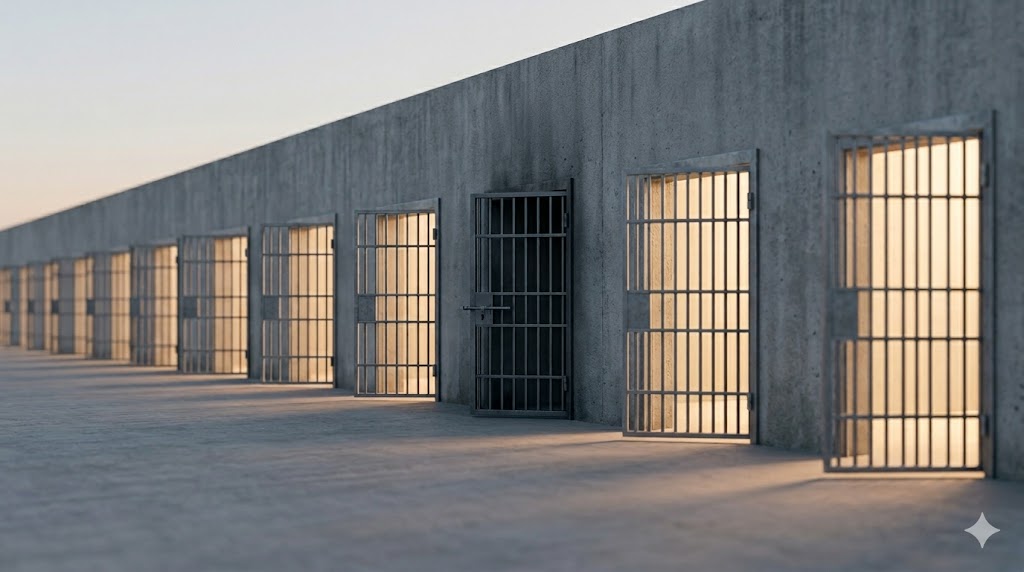
For these prisoners, the anniversary changes nothing, and that is the point of the design. The state can be expansive toward the 18,038 precisely because it is exact about the few. Mercy at scale is what makes the exceptions legible. The message to anyone weighing dissent is carried by the gates that stay shut on a day of national generosity.
The timing belongs to a larger production. Tajikistan is building toward the 35th anniversary of independence in September, a ‘year of creation and improvement’ in the official slogan, and Rahmon, now styled Leader of the Nation, is its central figure even as his son Rustam Emomali, the capital’s mayor and speaker of the upper house, is positioned to inherit the office. An amnesty fits that script. It performs the sovereign’s clemency, refreshes the bond between ruler and ruled, and costs the system nothing it values. The prisoners it releases were, for the most part, never a threat to it.
This is why the most informative part of the announcement is its silence. The figures are precise to the single prisoner, 18,038 and 11,305 and 6,733, and on the question the region’s rights groups will ask first, whether any political case sits among them, the law as presented says nothing at all. In Tajikistan, that silence usually serves as an answer. The full text will be published in the coming days, and it will be worth reading less for the numbers it confirms than for the names it does not contain.