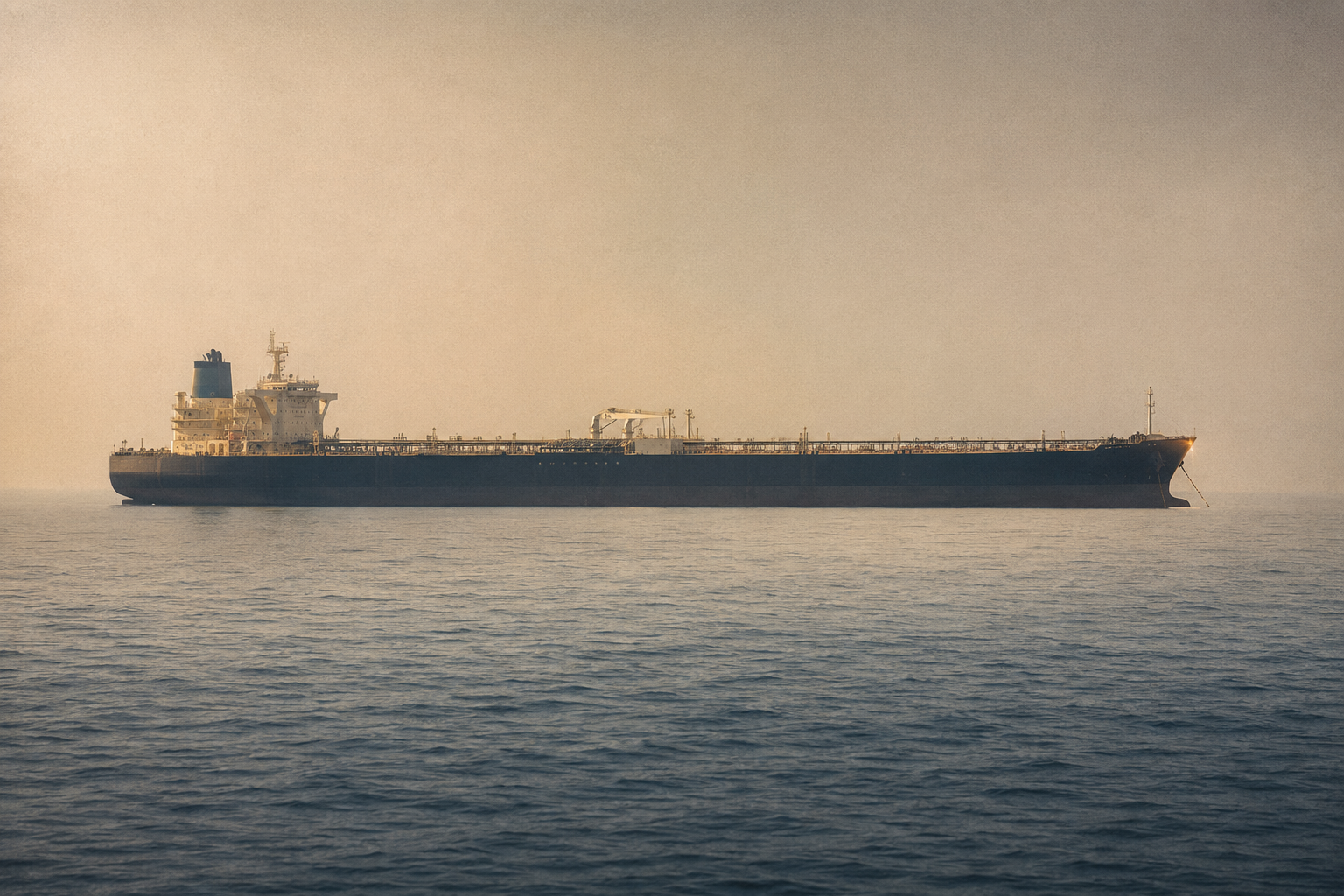
The spike has a Middle Eastern address. Houthi forces attacked the Saudi-flagged tanker NCC Ghazal; Saudi forces, coordinating with US Central Command, then struck pro-Iranian positions in Iraq, after what the wires count as more than 30 drone attacks on American and Saudi energy facilities inside 72 hours. Brent rose 6.6% to $90 and WTI 6.6% to $84.5, and traffic through Hormuz and Bab el-Mandeb remained difficult on Thursday morning.
For an oil exporter, $90 is normally the good week. Kazakhstan’s week runs the other way. Its main export route reopened on 27 July at a fraction of the June tempo, its three biggest fields entered the restart 70 to 90% below June output, and the terminal’s first-half throughput was already down 7.4% before the July attacks began.
Every dollar of the rally prices a barrel that is queueing rather than sailing.
The importing half of the region pays the rally at the pump. Bishkek’s street prices already run 5 to 8.5 som over state caps that hold until 30 September, and traders there say import offers have gone from $700 to $800 a tonne in spring to $1,800 to $1,900 now. Product prices follow the crude benchmark upward, and the benchmark just moved.
Tajikistan took the question to the top. On 29 July Emomali Rahmon told his cabinet to keep fuel prices stable and to speed up deliveries of petroleum products and liquefied gas. That evening he sat with Kassym-Jomart Tokayev in Astana, on the margins of the Games of the Future opening. Asia-Plus reports the two discussed increased fuel imports from Kazakhstan; the Akorda readout names trade, transport and energy without mentioning fuel. Kazakhstan’s own road-fuel export ban runs to 21 November with an exception for supplies authorised by government decision. That exception is the door Dushanbe is knocking on.
The Middle East premium reaches the region twice: once through the crude Kazakhstan cannot fully monetise while its route recovers, and once through the product prices its neighbours import.