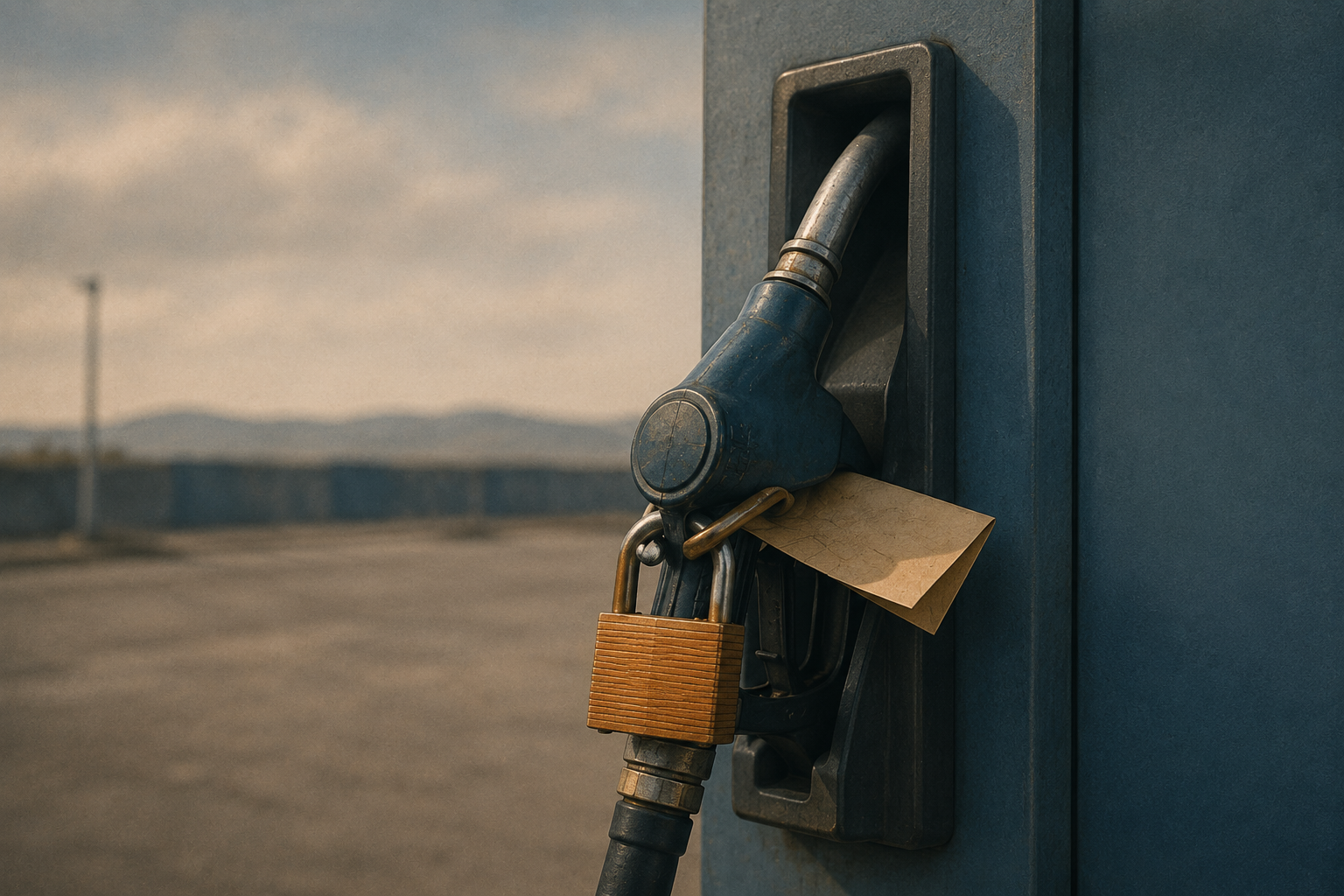
The decree turns Alexander Novak’s 25 July announcement into signed text, and goes one product further. A full diesel ban had only been under consideration through the summer; for August it binds producers and traders alike, and from 1 September the restriction lifts for direct producers. Diesel is the working fuel of harvest and haulage in the very month the region uses it hardest.
For Central Asia the operative line is the exemption. Fuel may leave Russia under international intergovernmental agreements and as humanitarian aid. That answers the question CAW has asked since the extension was announced: the EAEU and bilateral channels stay open, and everything else closes. Kyrgyzstan, which buys more than 90% of its gasoline from Russia, keeps its lifeline only in the form of scheduled government volumes; its petrol already runs 5 to 8.5 som over the cap, its diesel 4.4 to 6.
The region’s fuel now moves on signatures as much as on price.
Tajikistan spent the week acting on that logic. Rahmon ordered his cabinet on 29 July to secure the domestic market, and Asia-Plus headlined the Astana conversation plainly on Thursday: the presidents discussed increasing deliveries of petroleum products from Kazakhstan to Tajikistan. Kazakhstan’s own road-fuel export ban carries the same architecture, a wall with a government-decision gate. Between Moscow’s decree and Astana’s, nearly every litre crossing a Central Asian border now travels on an intergovernmental signature.
The price backdrop softened slightly into the evening, Brent easing to about $89.8. For buyers whose access is set by decree, the price matters less than the paper. Watch which intergovernmental volumes for August are published first, and whether Bishkek’s supply requests to Kazakhstan, Belarus, Azerbaijan and its other non-Russian counterparties produce a signed schedule rather than a readiness.