The balance improved by almost $6 billion in a year, from a deficit of $3.6 billion in the first half of 2025 to the surplus of $2.4 billion, and most of it came in the second quarter, which closed with $3.2 billion, the ministry said through Kazinform at 09:11. Its goods surplus more than doubled, from $7.7 billion to $16.2 billion, as exports grew faster than imports. In the ten years from 2016 to 2025 the account was in deficit nine times, averaging about 2.7 per cent of GDP, with the one surplus of $6.4 billion in 2022 followed by three years in the red, the last of them under lower oil prices and heavy imports.
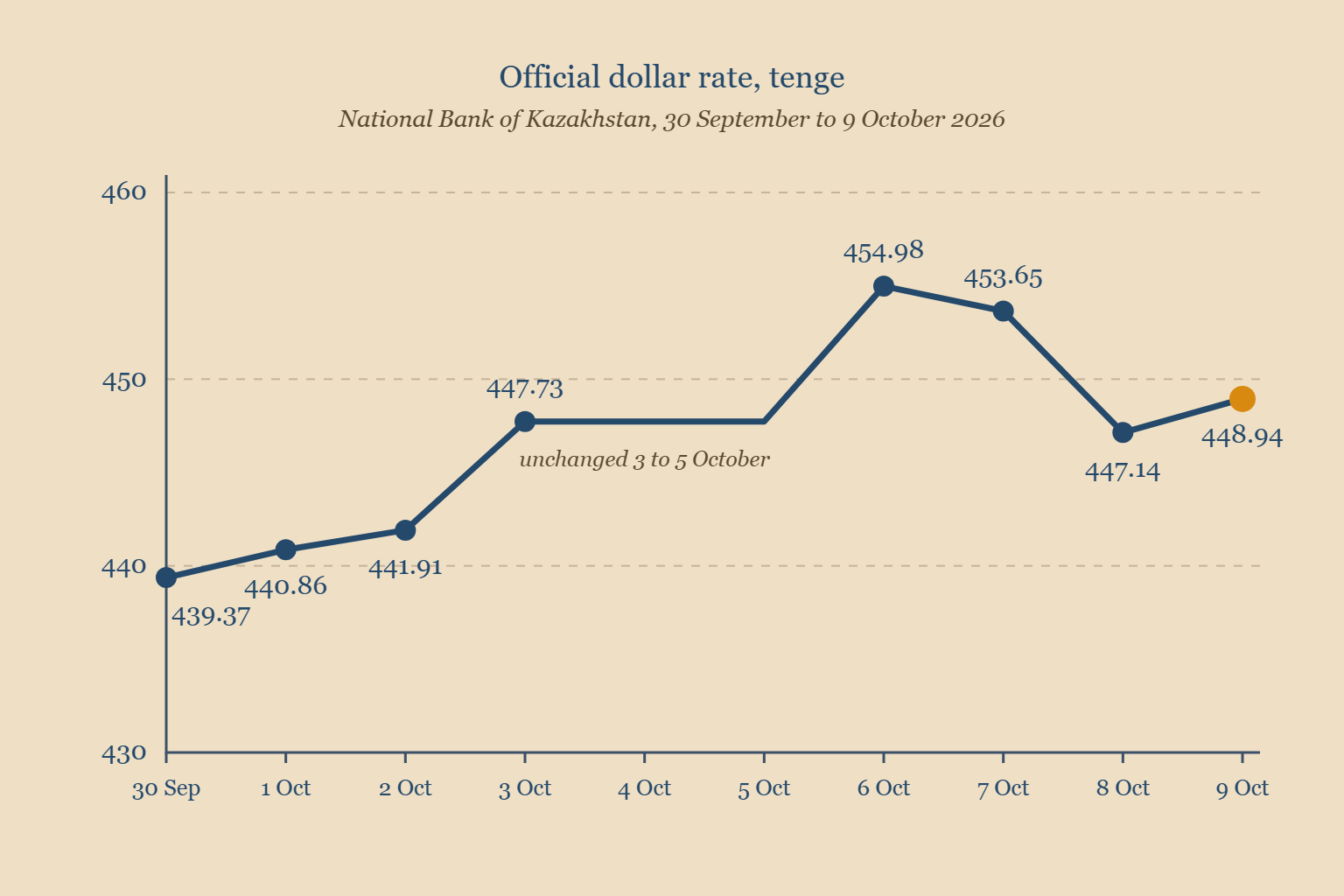
Annual inflation slowed to 9.3 per cent in September, half a point below August, the same ministry reported earlier. On the currency side the official rate moved from 439.37 tenge on 30 September to 441.91 on 2 October, 447.73 for Saturday to Monday, 454.98 on Tuesday, 453.65 on Wednesday and 447.14 on Thursday before Friday’s 448.94, by the National Bank’s feed. Nine deficit years in ten, and the first surplus in three arrives with the tenge two per cent weaker than at the end of September.
At Thursday’s exchange trading the dollar rose to almost 449, Kazinform reported at 15:52, and the base rate stands at 16.25 per cent with the next decision on 23 October.
Nine deficit years in ten, and the first surplus in three arrives with the tenge two per cent weaker than at the end of September.
A surplus on current account lowers the economy’s need for external financing and the pressure on the currency market, the ministry’s note says in its own explanation of the figure, and the market’s week says the second has yet to show.